IMAGES FROM SPACE
The images below blend dozens of monochrome exposures captured over multiple nights, using non-traditional coloring techniques. Light from hydrogen, sulphur, and oxygen is isolated and reassembled to reveal the nebula’s hidden structure.

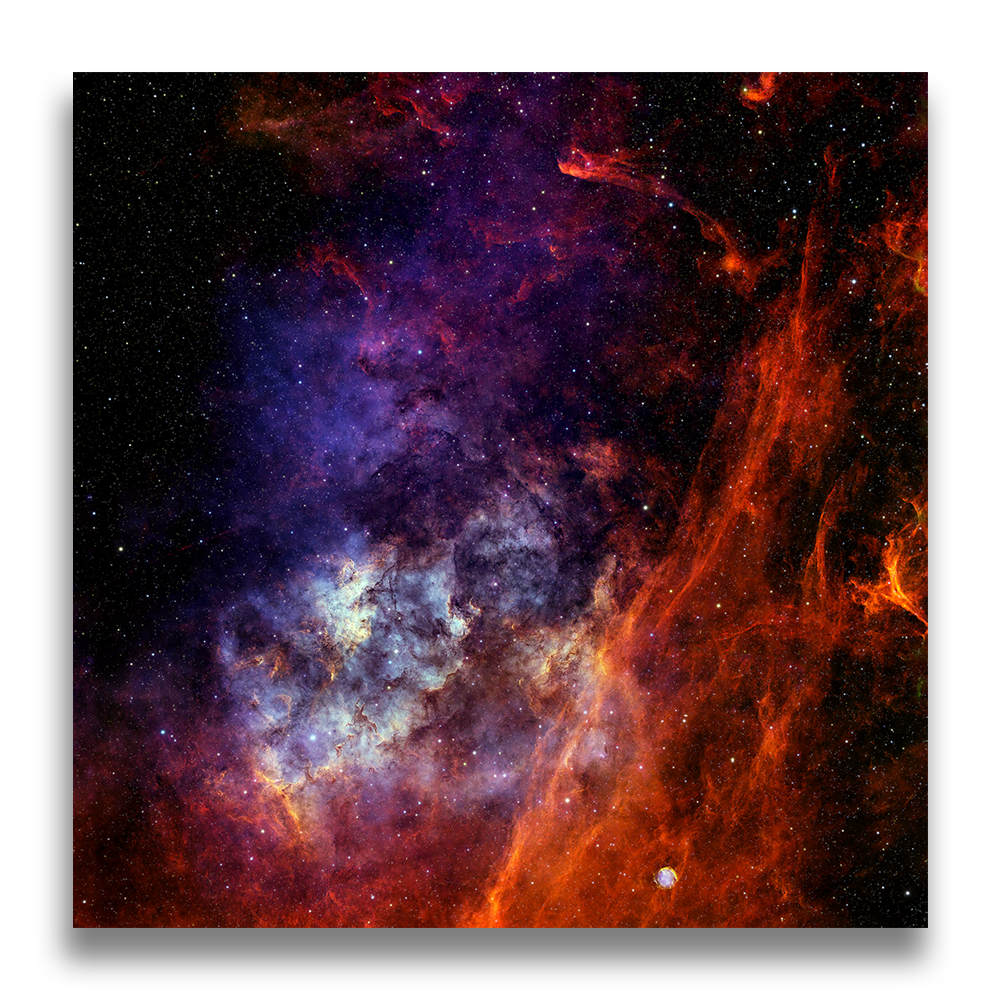
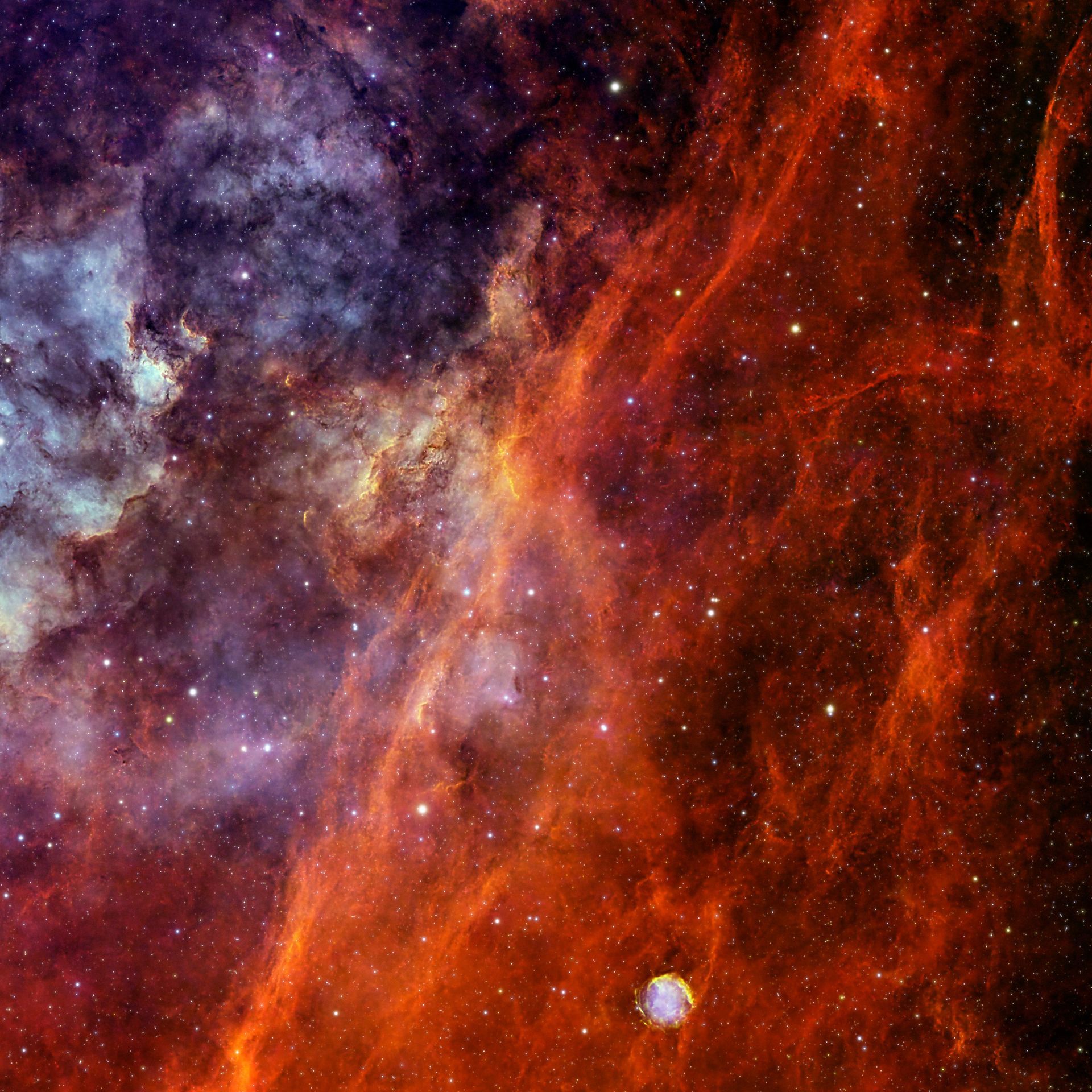
FIRE & SMOKE NEBULA
The Fire & Smoke Nebula is a dramatic region of glowing hydrogen and dark interstellar dust, where intense starlight ignites sweeping clouds of gas.
Bright, flame-like structures rise through drifting shadows, revealing the dynamic forces shaping this little-known nebula.
ARTIST'S NOTES
This region is cataloged as Sh2-115 in the Sharpless Catalog—a designation that says little about the character of the nebula itself.
As the image emerged over many hours of processing, from data collected across five nights, its structure began to resemble rising flames and smoke. The name Fire & Smoke Nebula felt inevitable.
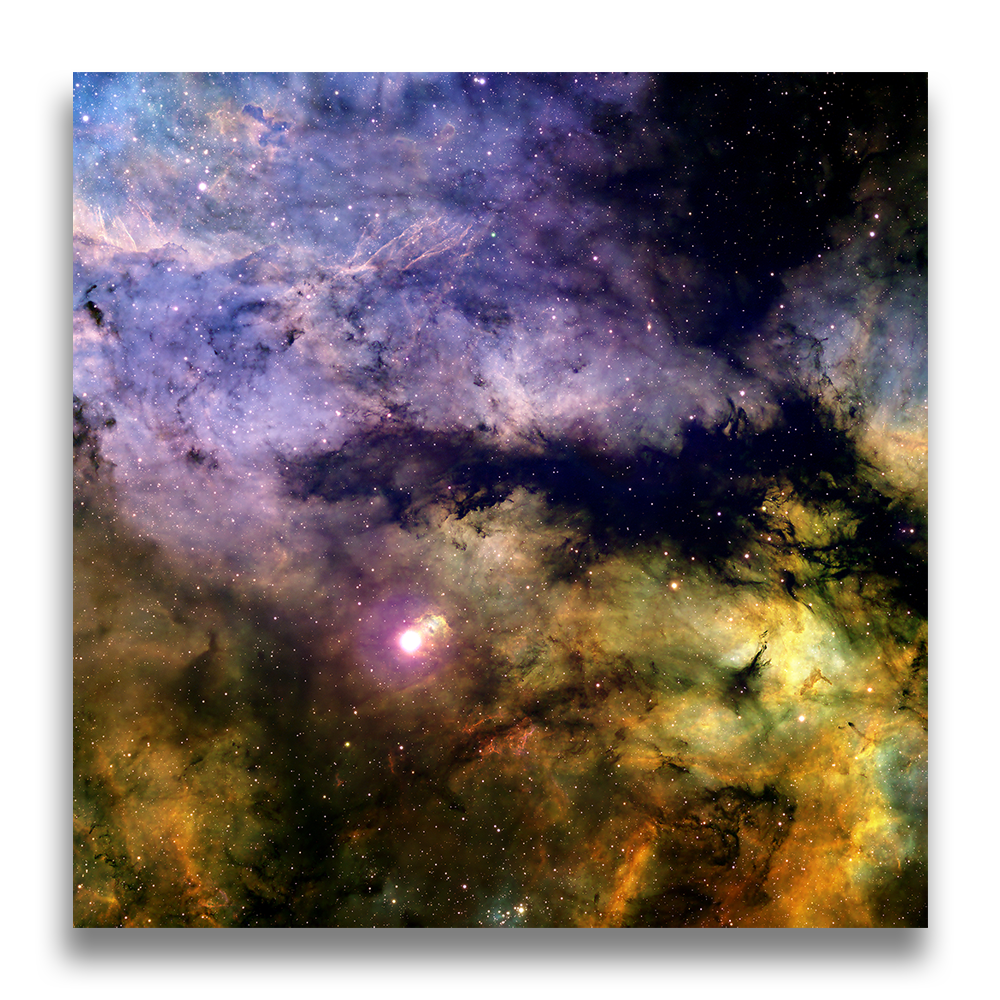
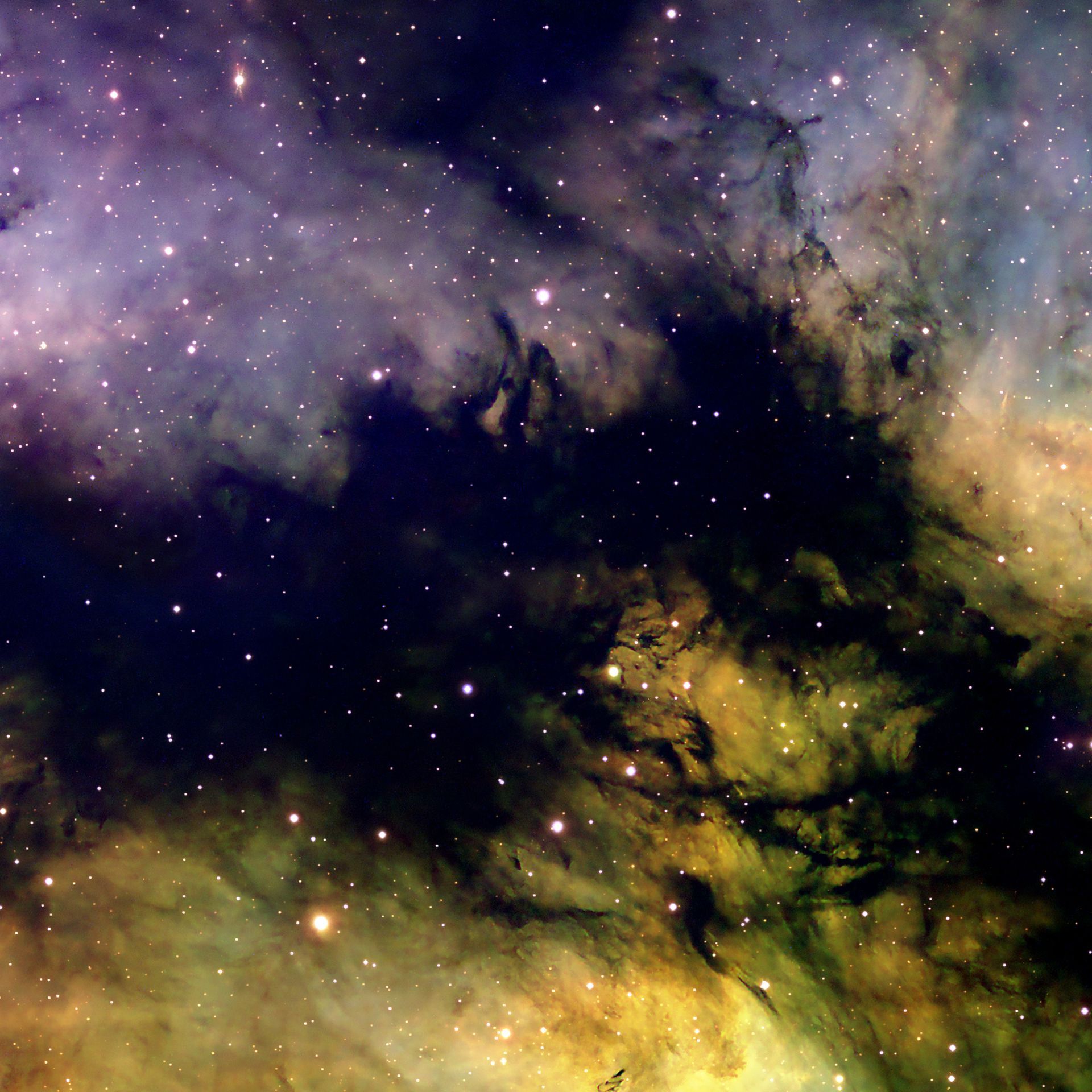
GAMMA CYGNI NEBULA
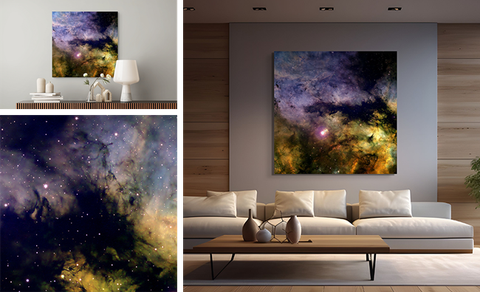
At the heart of the Swan constellation, 1,800 light-years away, this nebula is a vast cloud of glowing hydrogen gas — sculpted by the fierce stellar winds of one of the brightest stars in the night sky.
This light from this nebula left its source before the fall of Rome, now captured in a single frame that invites you to hold deep time on your wall.
ARTIST'S NOTES
I chose to frame just the heart of this vast nebula, where a dark lane of cosmic dust dramatically divides the scene into two distinct parts — one glowing with warm, tones, the other cool and soft.
What you're seeing is only a fraction of the whole; the full nebula stretches seven times wider than the Moon across our sky.
SANDWORM NEBULA
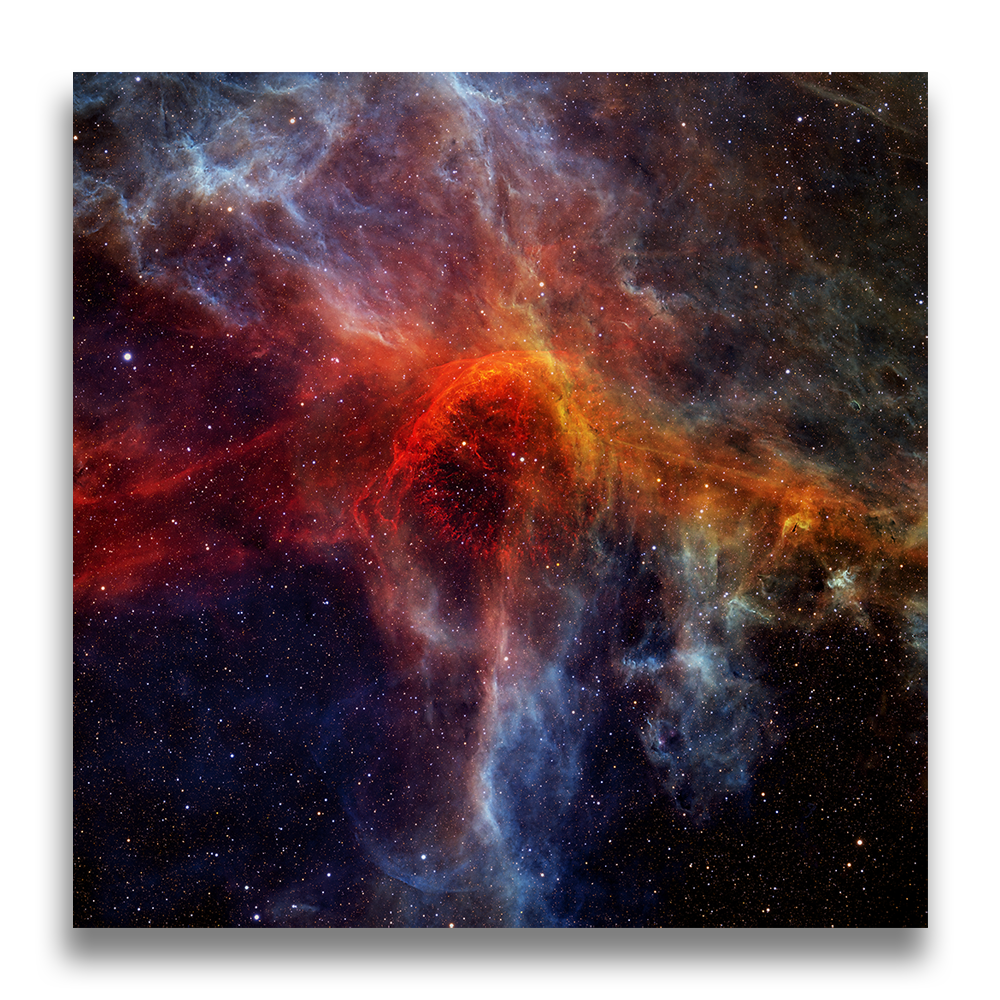
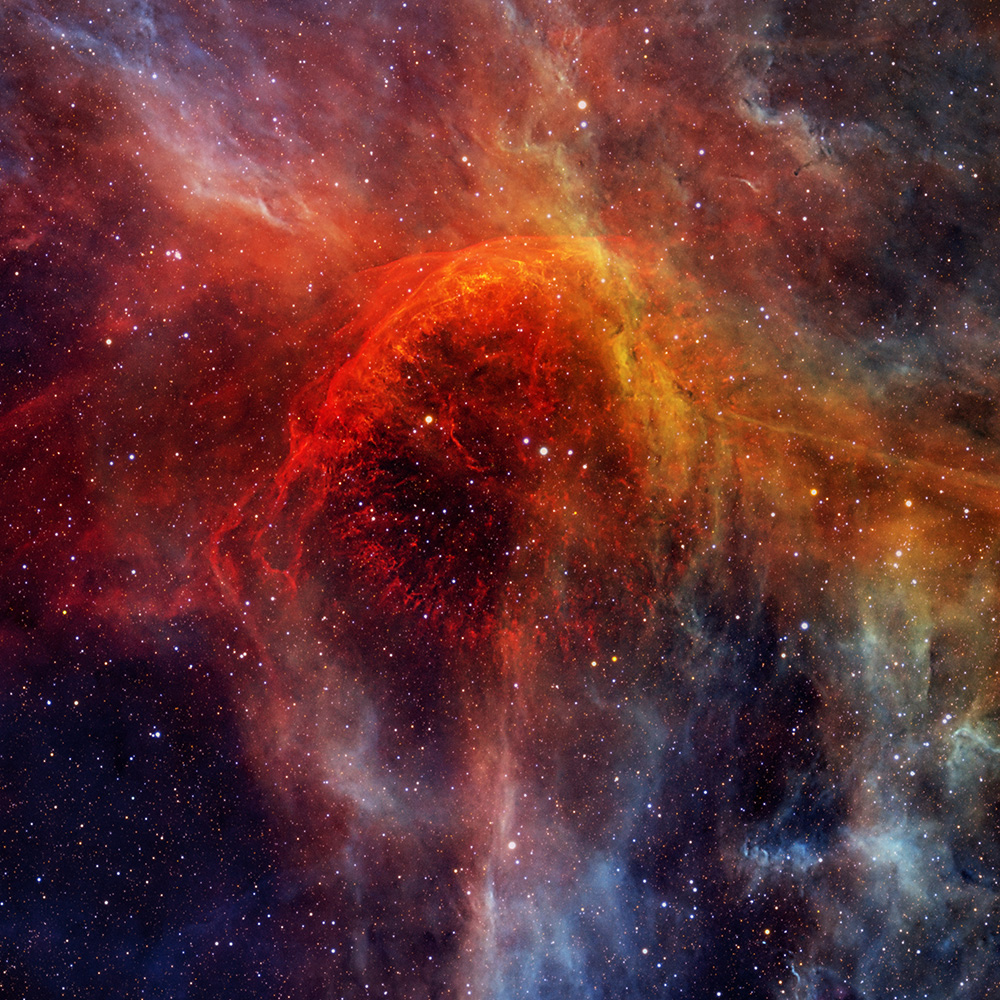
A Wolf–Rayet star whose extreme radiation and stellar winds have created the Sandworm Nebula, a complex structure of ionized gas and shock fronts.
The fine filaments visible here are shaped by the interaction between fast stellar outflows and slower surrounding material.
ARTIST'S NOTES
Although captured with the familiar Hydrogen-alpha, Sulphur II, and Oxygen III filters, the image’s color treatment is distinctly non-standard.
By reassigning and blending the data beyond the traditional Hubble Palette, the processing brings the nebula’s core forward while allowing the broader structure to fade gently into the background.
ARTIST'S NOTES
This region is cataloged as Sh2-115 in the Sharpless Catalog—a designation that says little about the character of the nebula itself.
As the image emerged over many hours of processing, from data collected across five nights, its structure began to resemble rising flames and smoke. The name Fire & Smoke Nebula felt inevitable.

THE PLEIADES
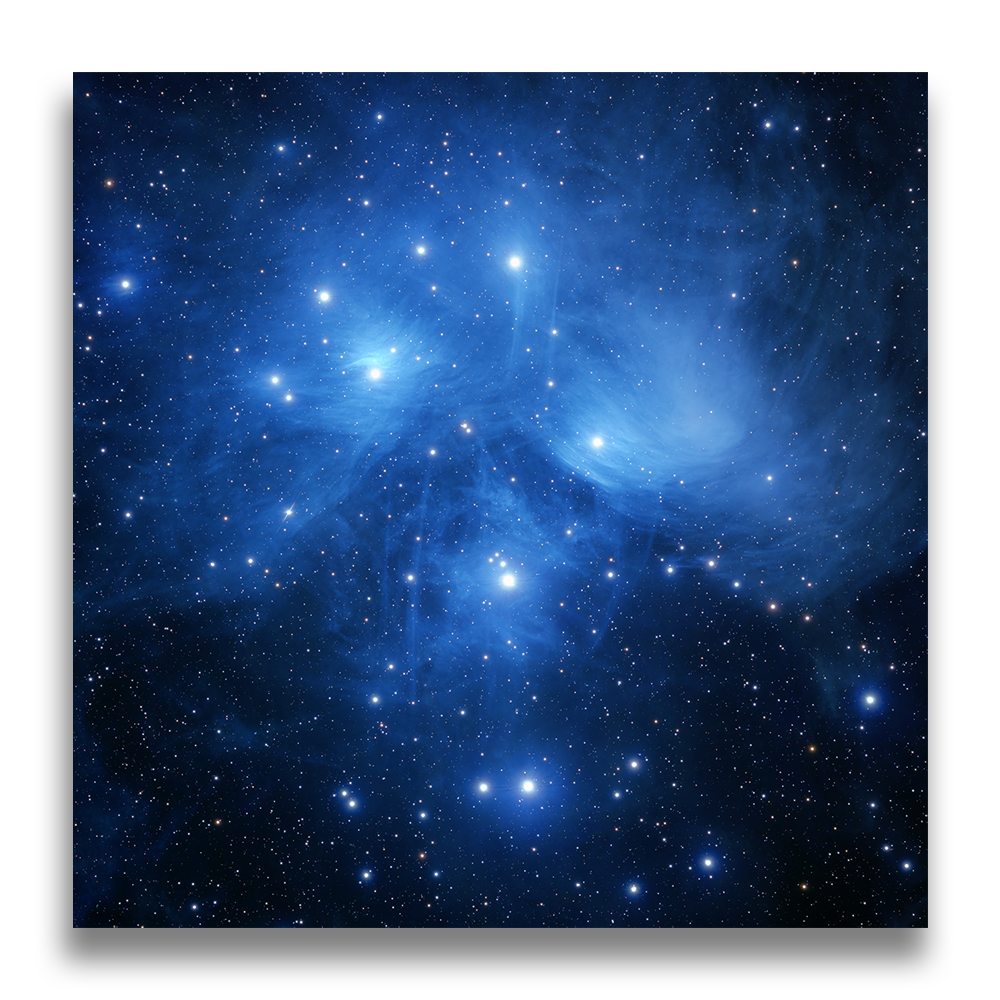
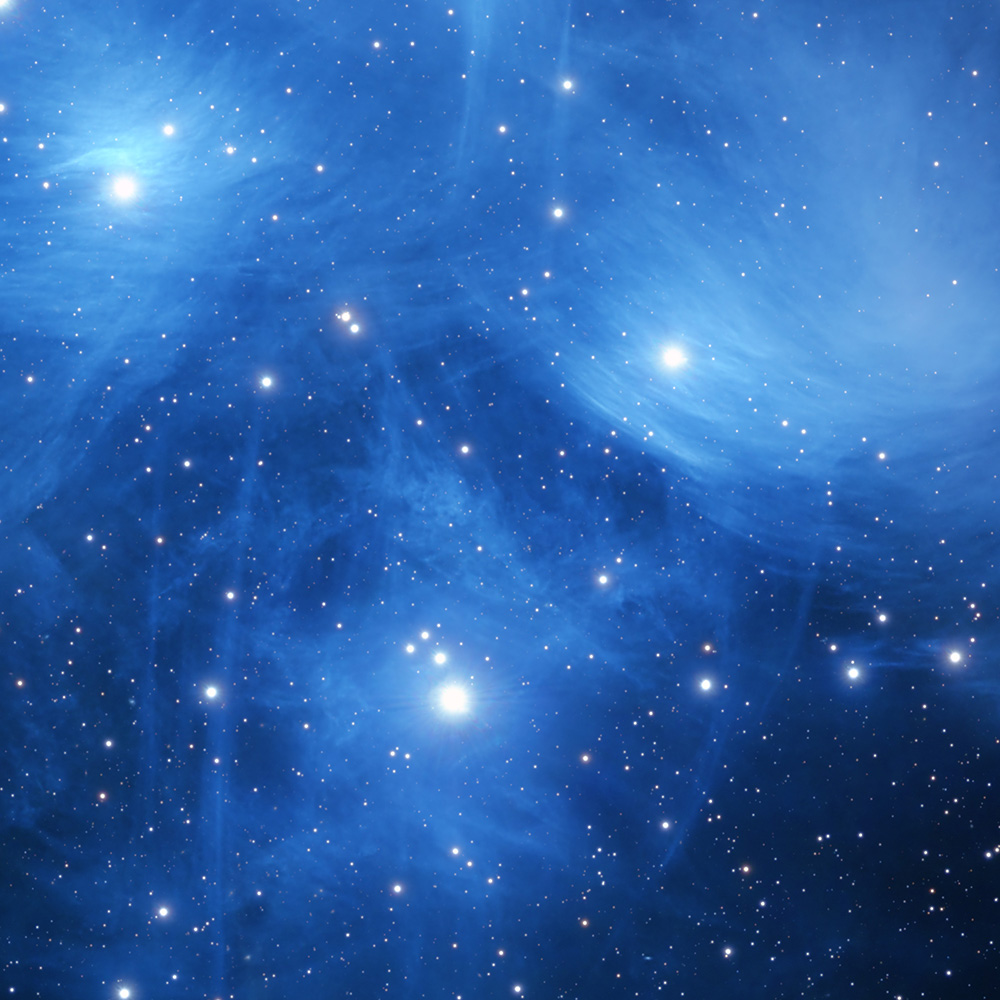
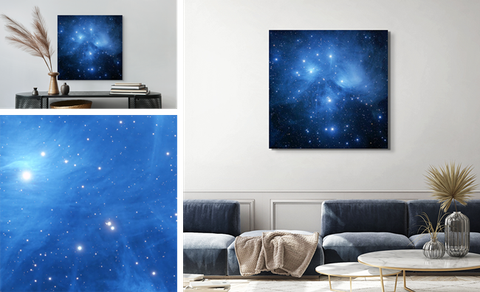
The Pleiades are one of the most recognized star clusters in the night sky — seven young, blue-white stars burning brilliantly, draped in wispy veils of interstellar dust.
Known to nearly every ancient culture on Earth, from Greek mythology to Māori navigation, this cluster has guided humanity for thousands of years — and now it can illuminate your wall.
ARTIST'S NOTES
Unlike most of my deep-sky work, this image is captured in true color — red, green, and blue — rendering the Pleiades much as your eye might see it, with none of the dramatic false-color palette I often use to reveal invisible gases.
I also broke from convention by rotating the frame so the sweeping dust nebulosity rises toward the top of the image, turning a familiar subject into something that feels new.
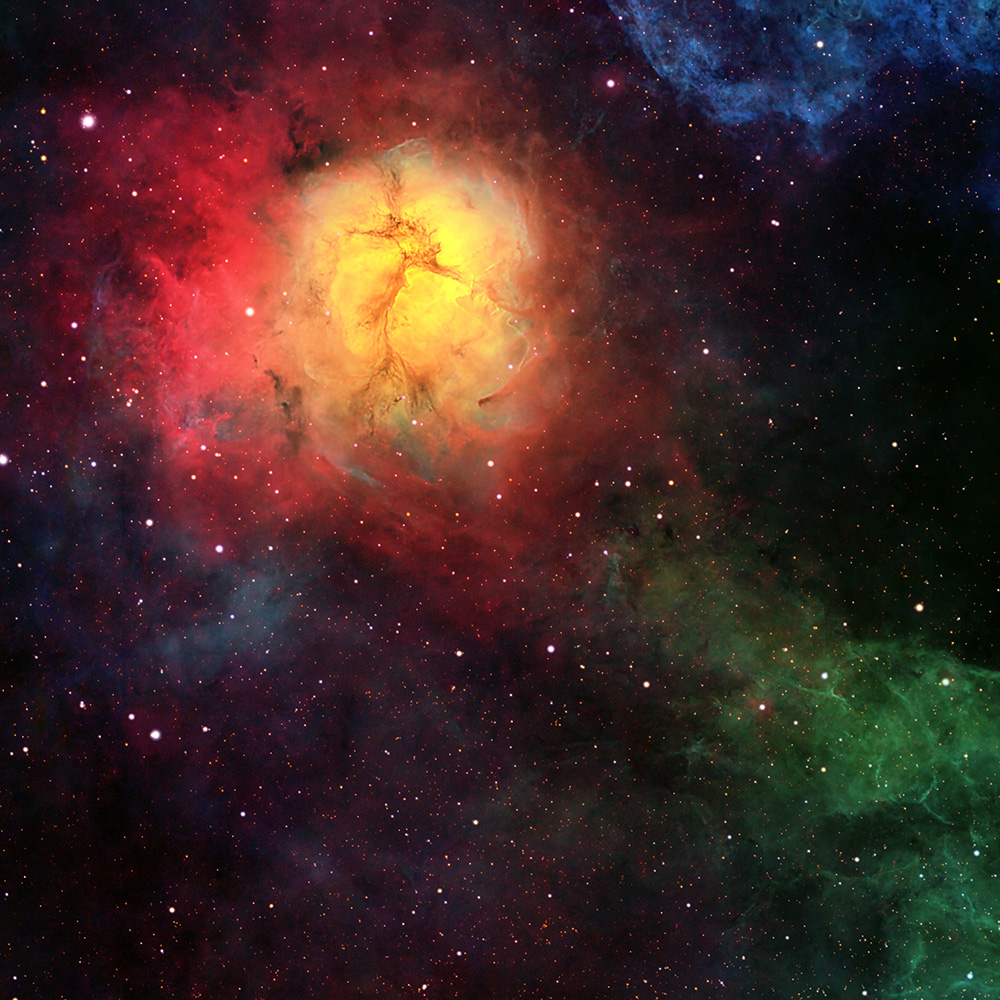
TRIFID NEBULA
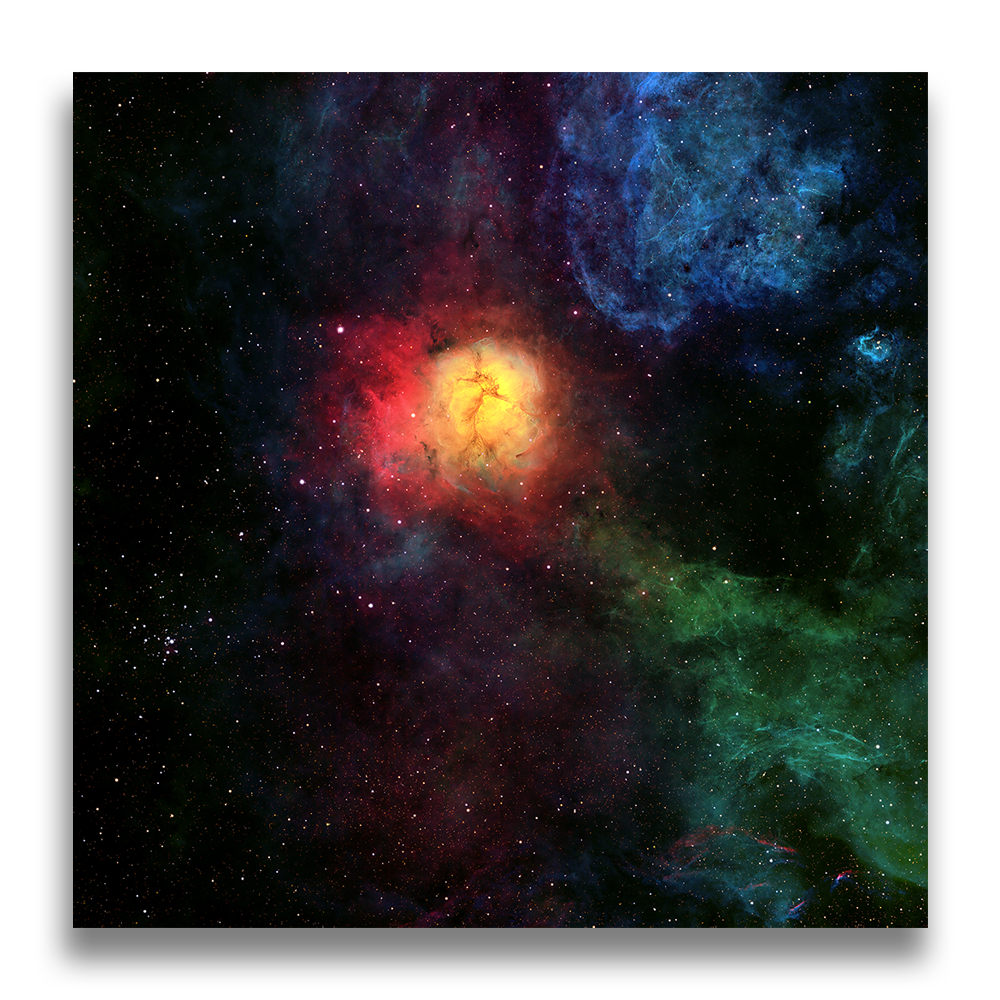
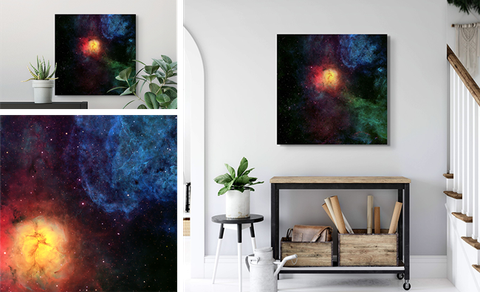
The Trifid Nebula is a rare convergence of three nebula types—glowing emission gas, light-reflecting dust, and dark absorbing clouds. Dark lanes divide the nebula into distinct sections, giving it its name.
This image captures the Trifid’s layered complexity, where star formation, reflection, and obscuration coexist in delicate balance.
ARTIST'S NOTES
The Trifid Nebula is rarely imaged using narrowband filters, as its natural brightness makes full-color imaging the more common approach.
For this image, I developed a custom palette from H-alpha, S II, and O III data, reinterpreting this familiar object in a new way.

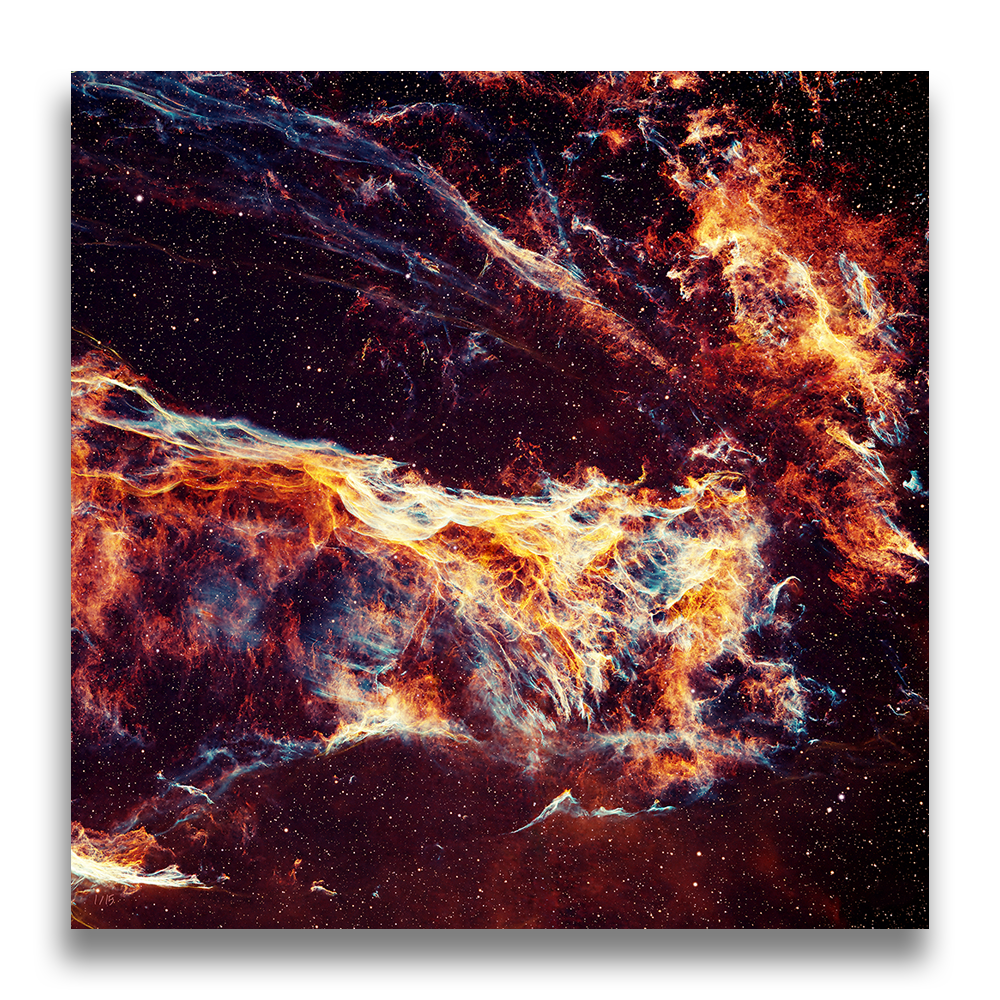
WESTERN VEIL NEBULA
SERIES : 1 of 2
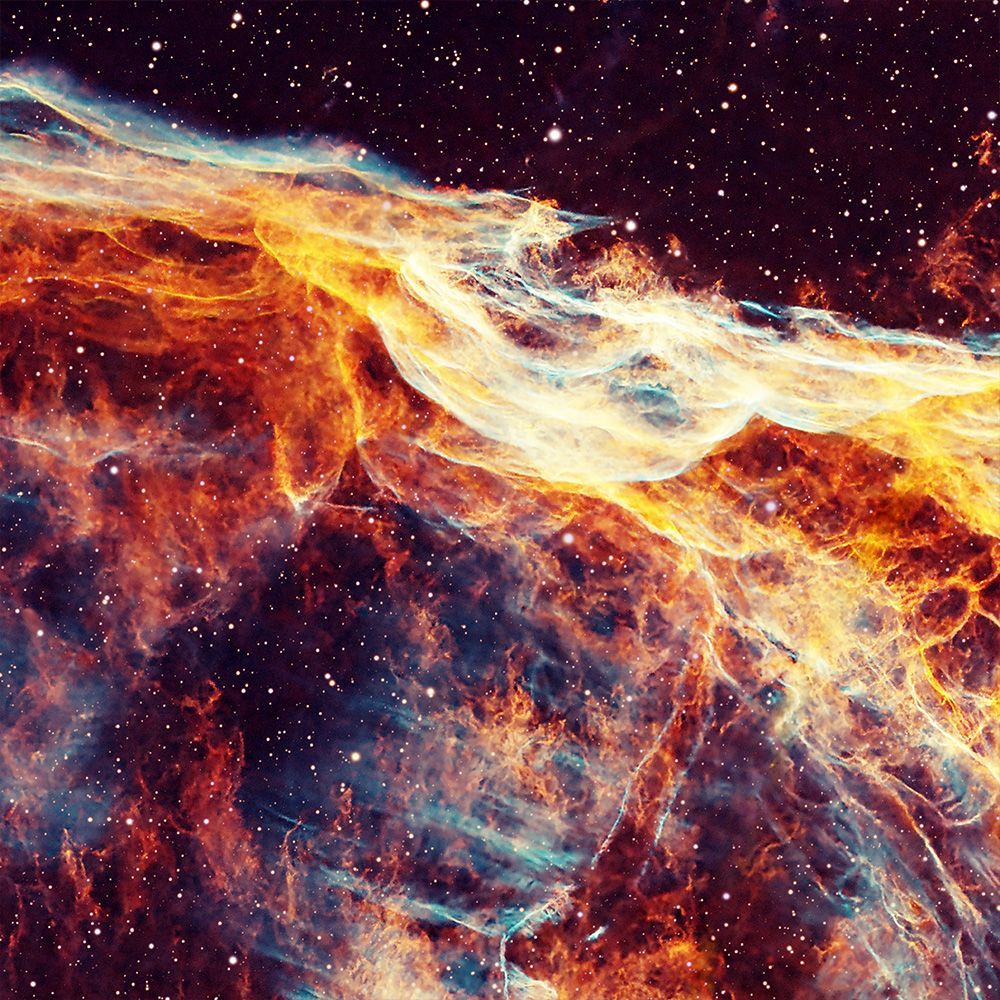
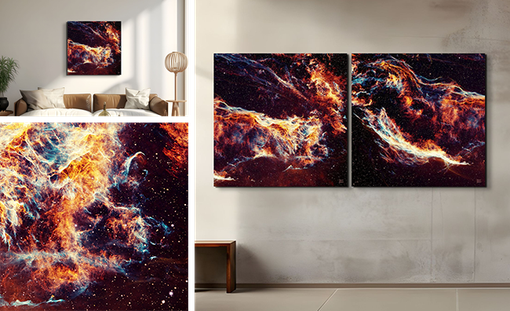
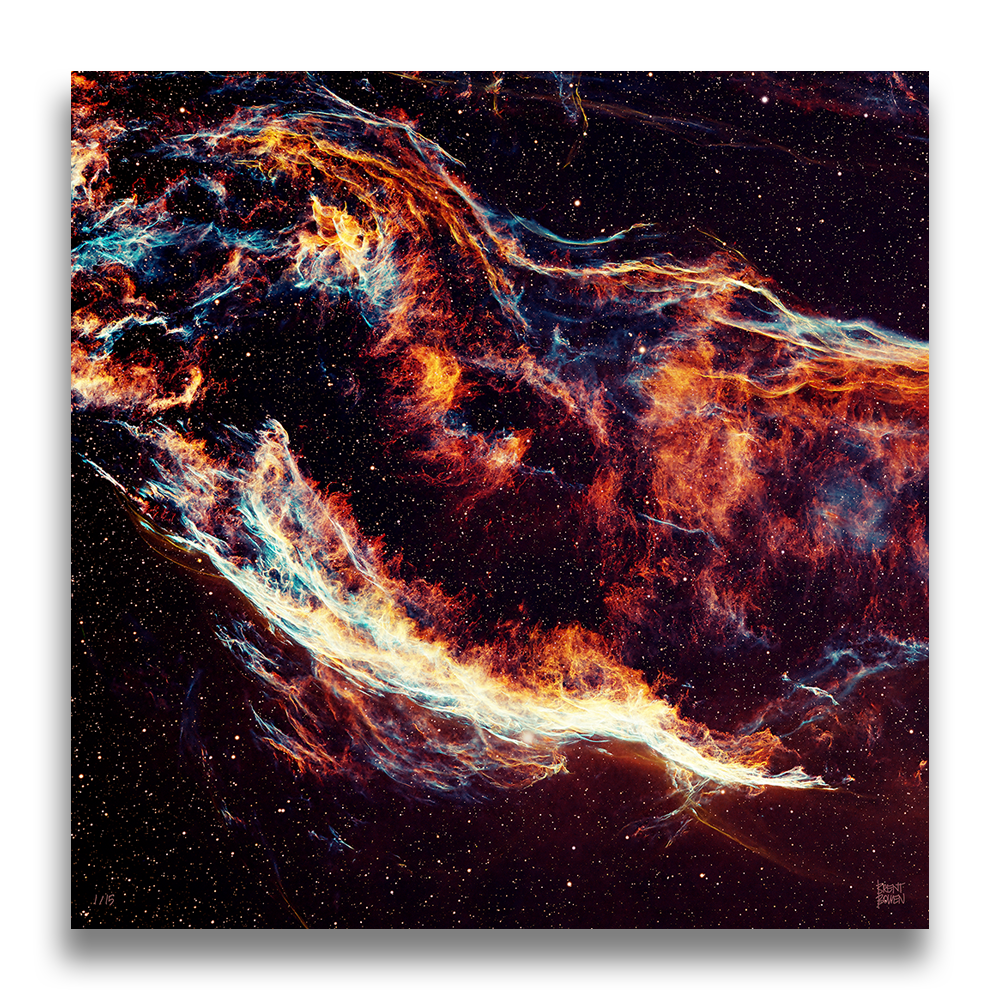
The Veil Nebula is the expanding remains of a massive star that exploded thousands of years ago, leaving behind an intricate web of glowing filaments.
These delicate structures trace shock waves racing through space.
ARTIST'S NOTES
When I examined isolated sections of this vast supernova remnant it revealed dramatically different forms and textures.
The two images shown here capture less than a quarter of the full nebula, offering focused views within this immense structure.
WESTERN VEIL NEBULA
SERIES : 2 of 2
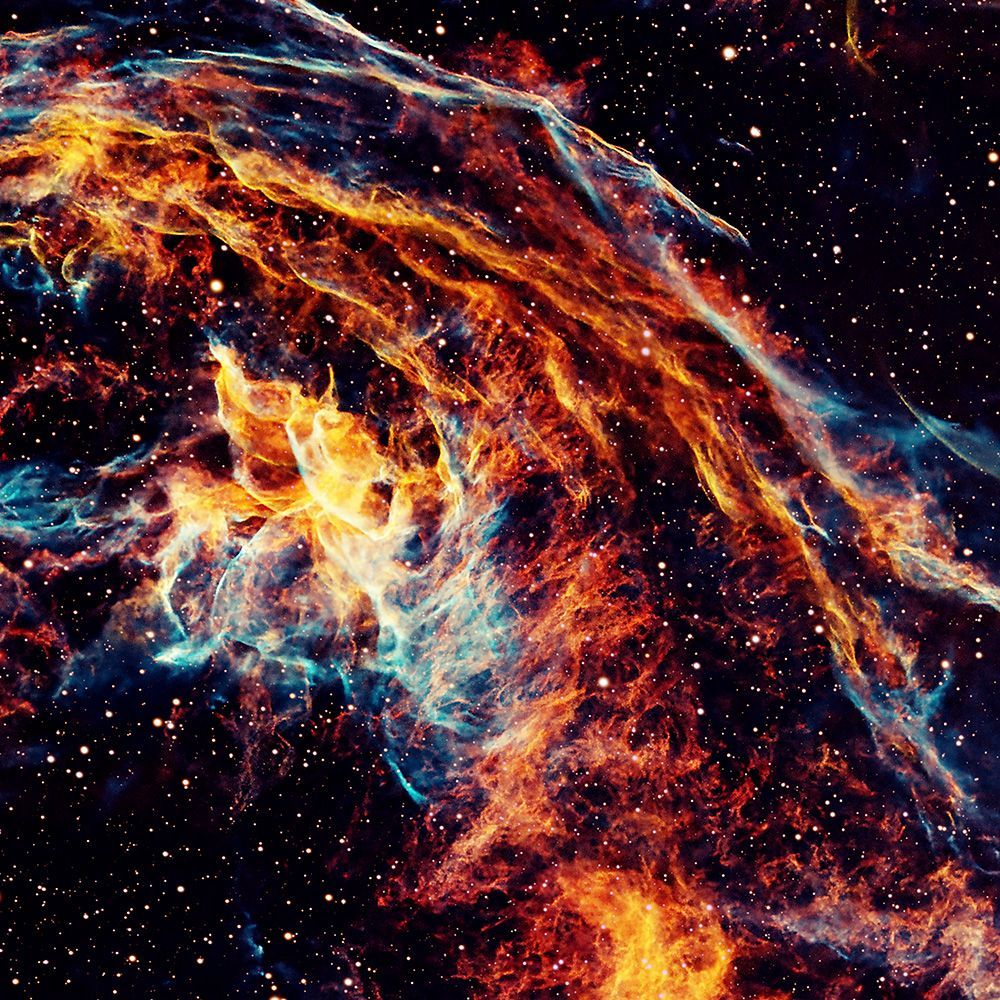
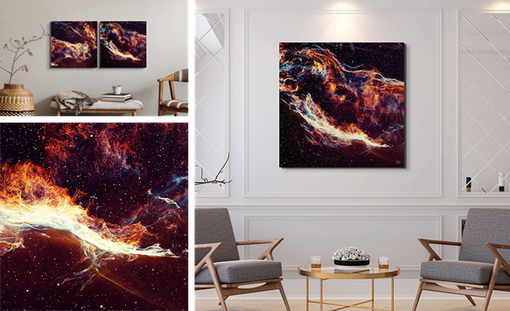
The second image in the series. The two images have been cropped to make each a unique standalone piece, and they also work well as a group.
ARTIST'S NOTES
When I examined isolated sections of this vast supernova remnant it revealed dramatically different forms and textures.
The two images shown here capture less than a quarter of the full nebula, offering focused views within this immense structure.
BLACK BOULDER OBSERVATORY
Perched atop Black Boulder Mesa, a high desert mesa in southern Utah, far from city lights, beneath some of the clearest skies in the country, is where my vision to image the cosmos comes to life.
After more than a decade capturing the night sky from my home in Salt Lake City, I've set out to push the boundaries of my craft. I've spent several years designing and perfecting equipment to remotely operate two telescopes housed in my private observatory.

ROSETTE NEBULA
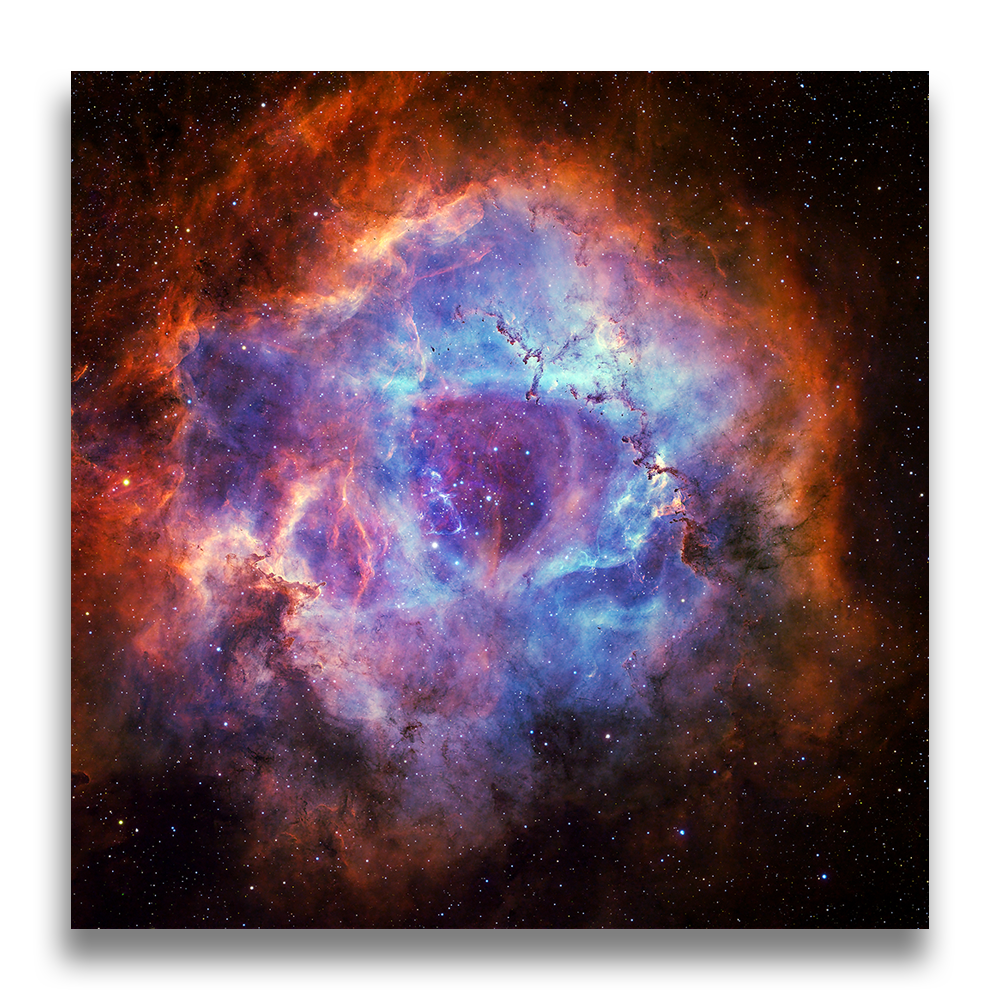
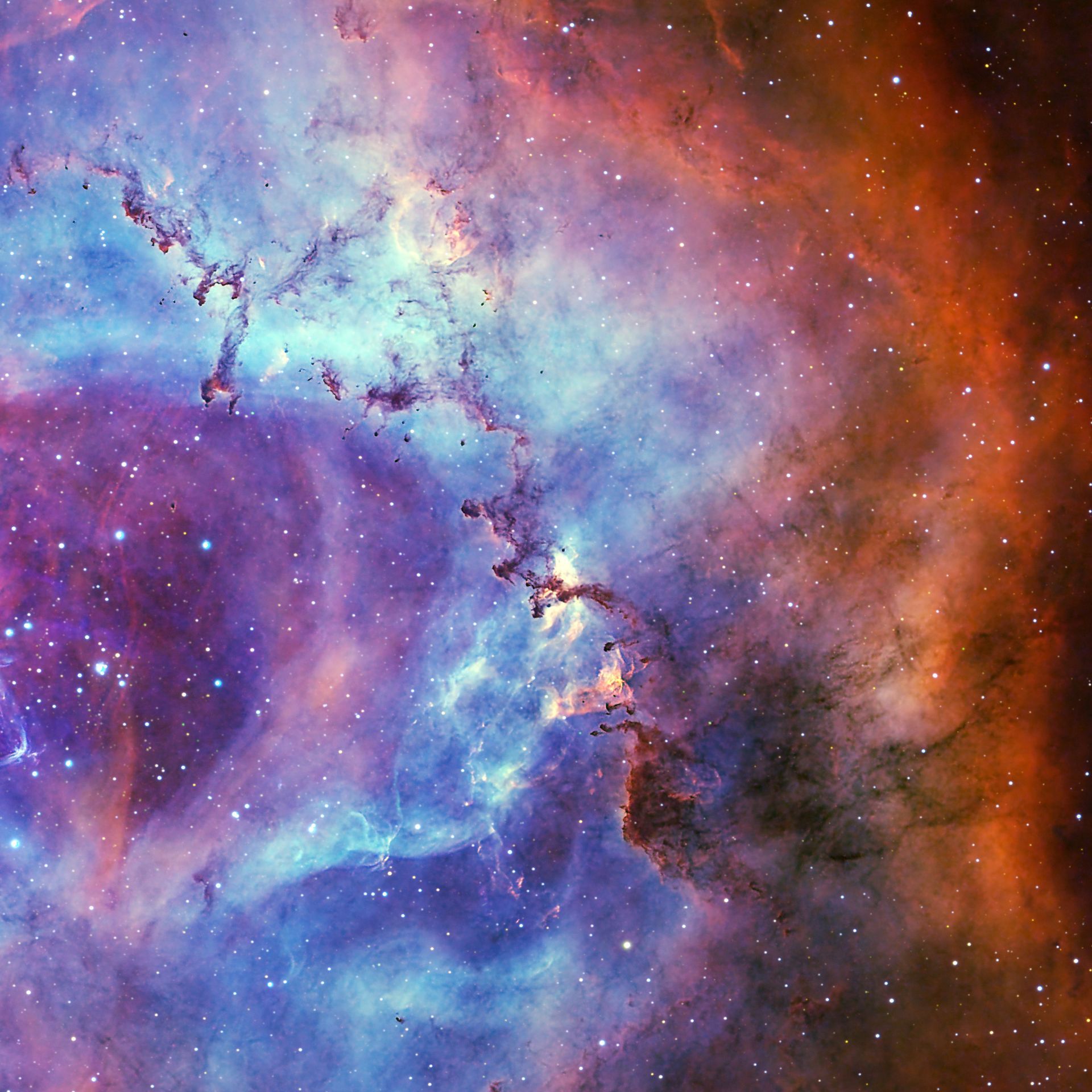
Shaped by the solar winds of newborn stars, the vast star-forming region glowing with deep warm shades and soft blue light. Captured here in great detail, this image reveals the heart of a stellar nursery where new suns are born.
ARTIST'S NOTES
Color adjustments were made with intention, drawing attention to the cool blue oxygen at the center while enhancing the warmer sulphur- and hydrogen-rich regions surrounding it.

JELLYFISH NEBULA
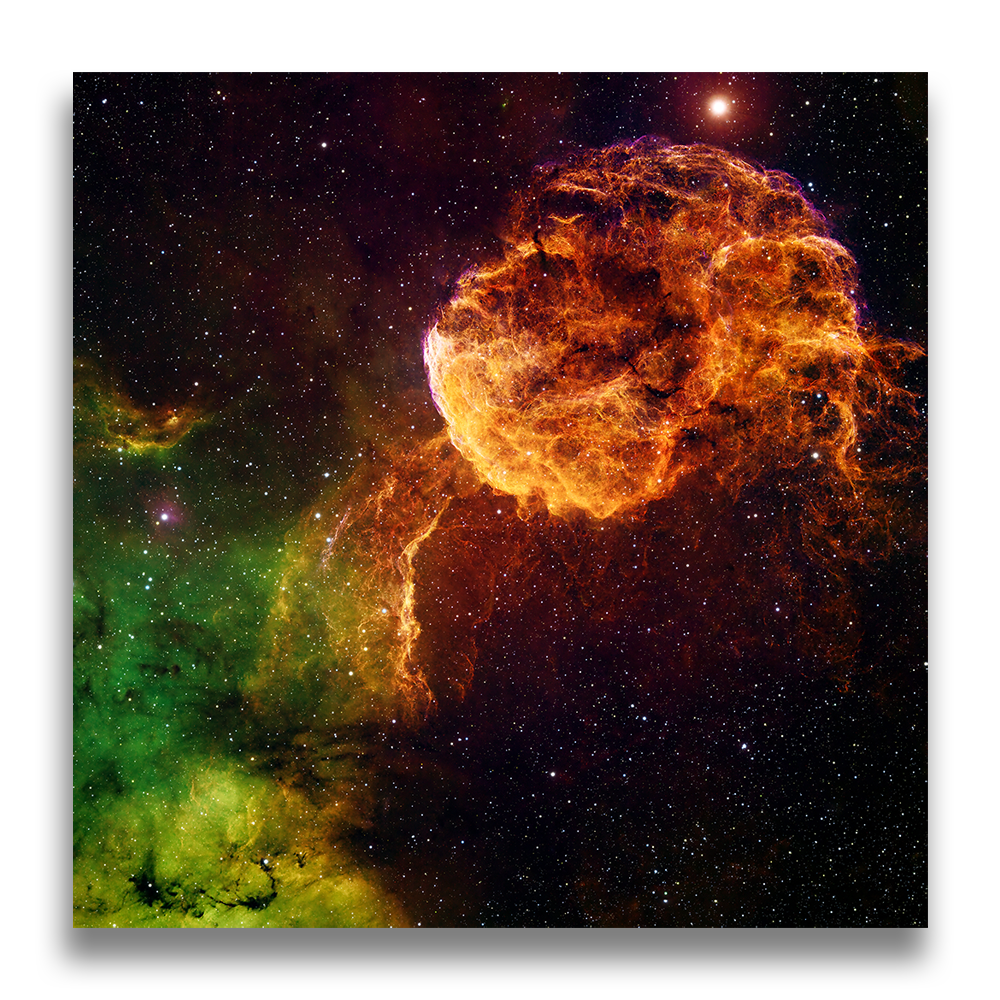
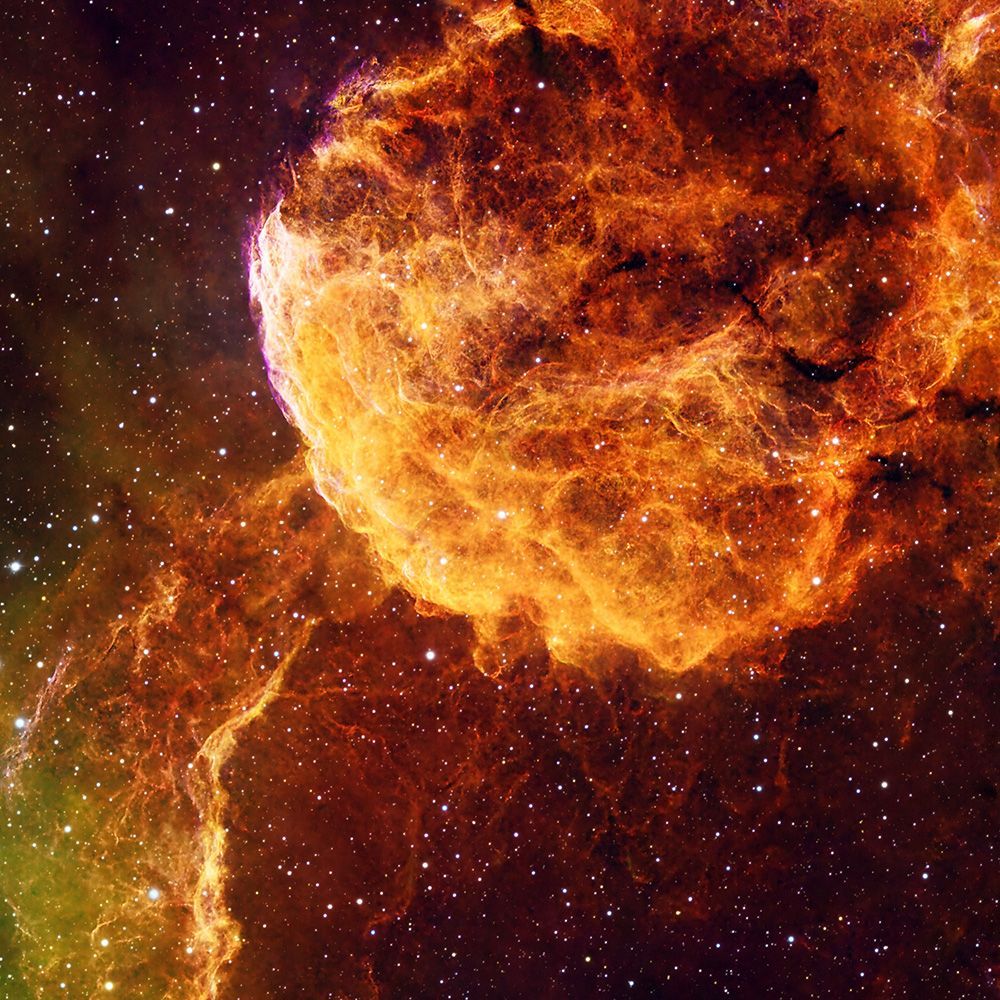
Named for its fluid, drifting shape, the Jellyfish Nebula is the remnant of a star that exploded thousands of years ago. Its radiant arcs and filaments stretch across hundreds of light-years, glowing in hydrogen light that reveals the quiet aftermath of stellar destruction.
ARTIST'S NOTES
The Jellyfish Nebula’s sharply defined form stands in contrast to the faint, distant nebula drifting through the lower left of the frame.
This imbalance—both in structure and in warm versus cool color—adds a subtle tension that shapes the overall composition.
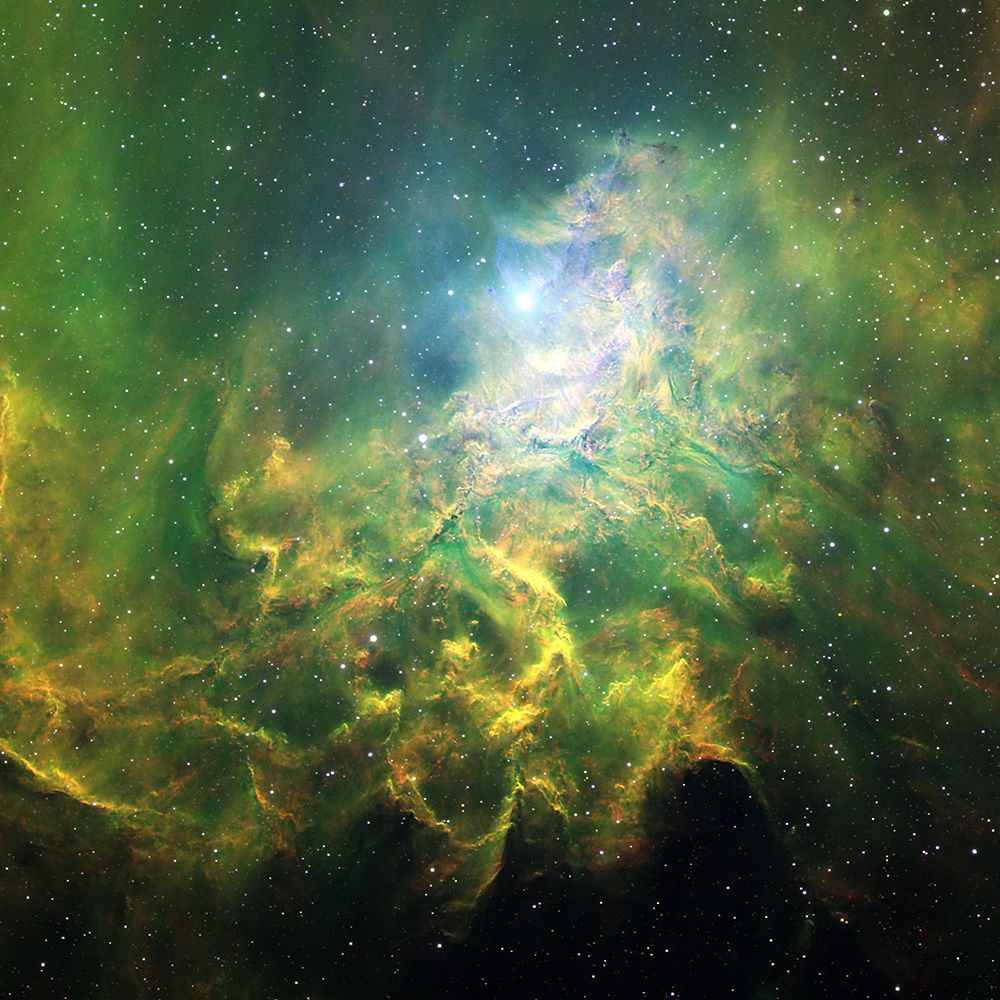
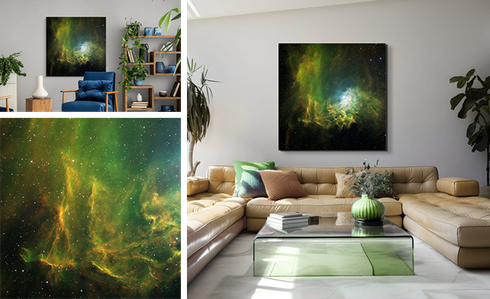
FLAMING STAR NEBULA
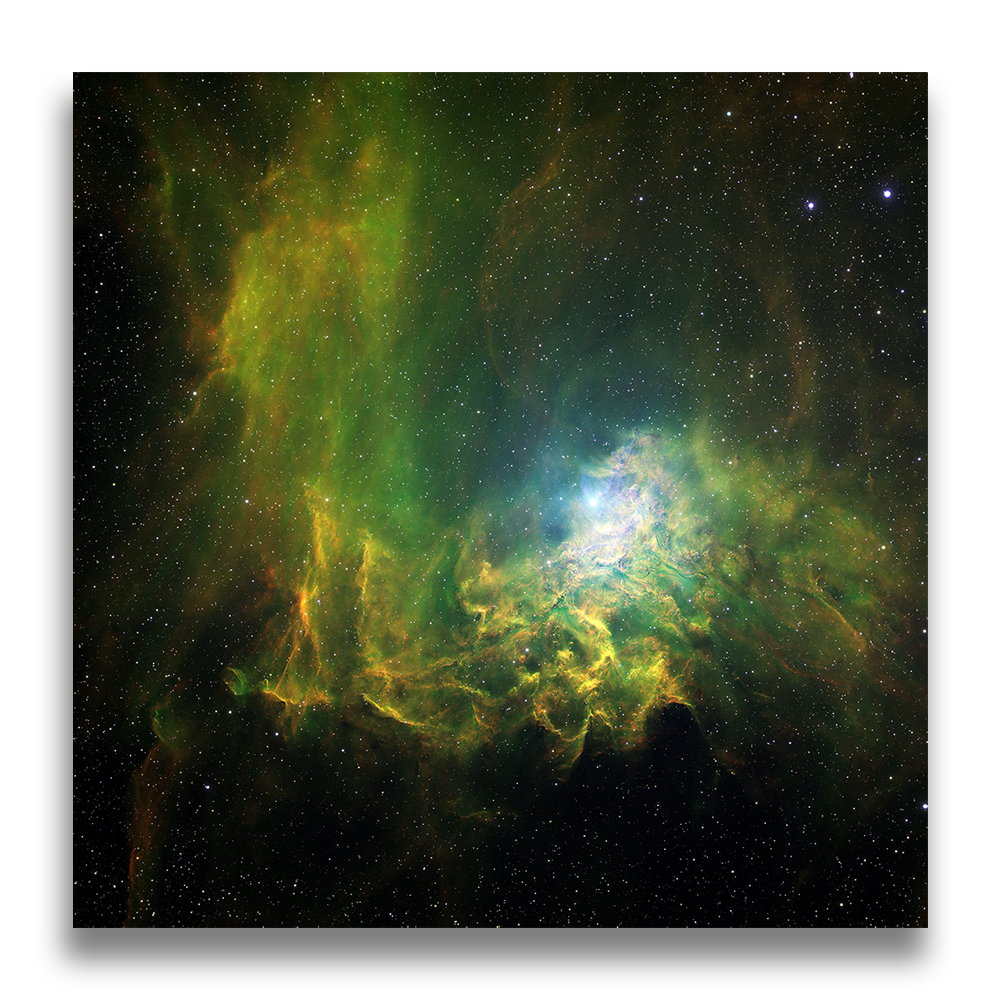
The Flaming Star Nebula glows against the darkness. Its tangled filaments lit by the fierce radiation of a nearby runaway star.
Clouds of hydrogen glow while shock fronts and dark dust lanes twist through the scene, giving the impression of motion.
ARTIST'S NOTES
The solar winds from the large star, near the center of this image, is pushing dust and gases away, while also heating them and causing them to emit light of their own.
The dominant green of this image is Hydrogen, the most abundant element in the universe.
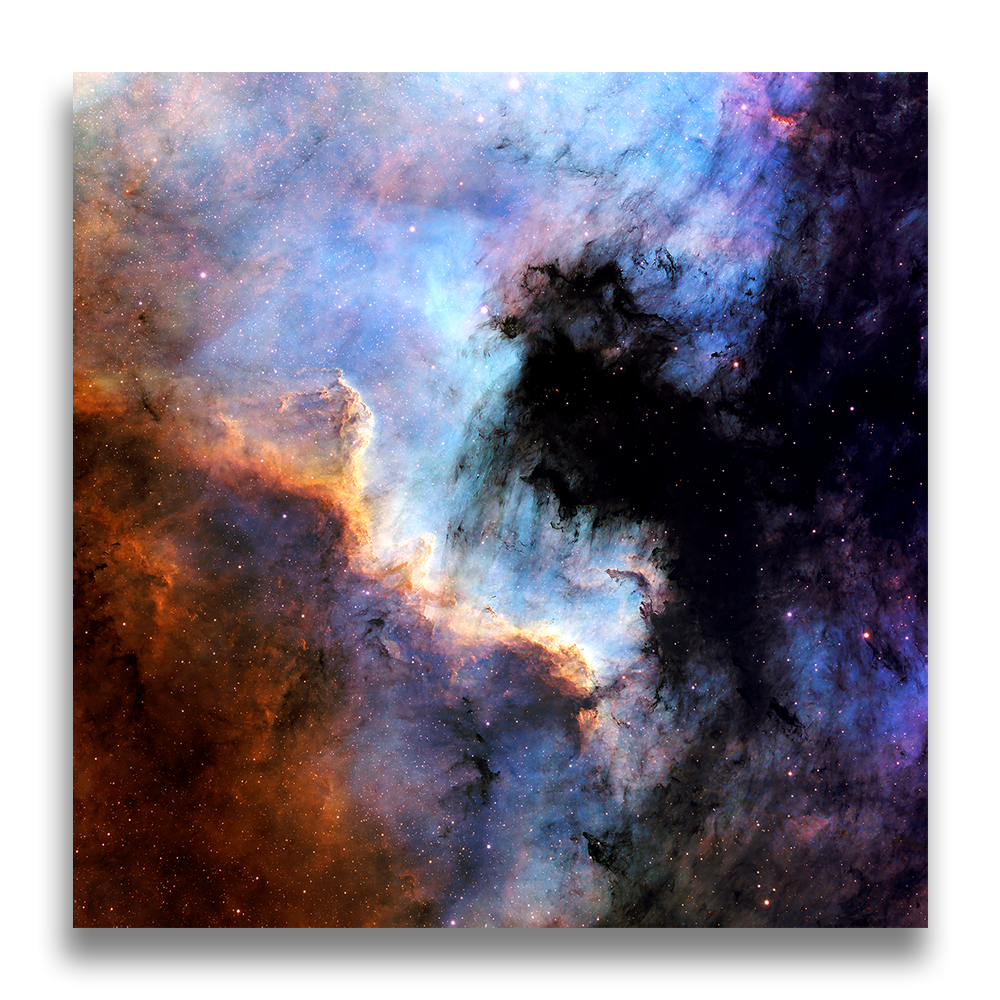
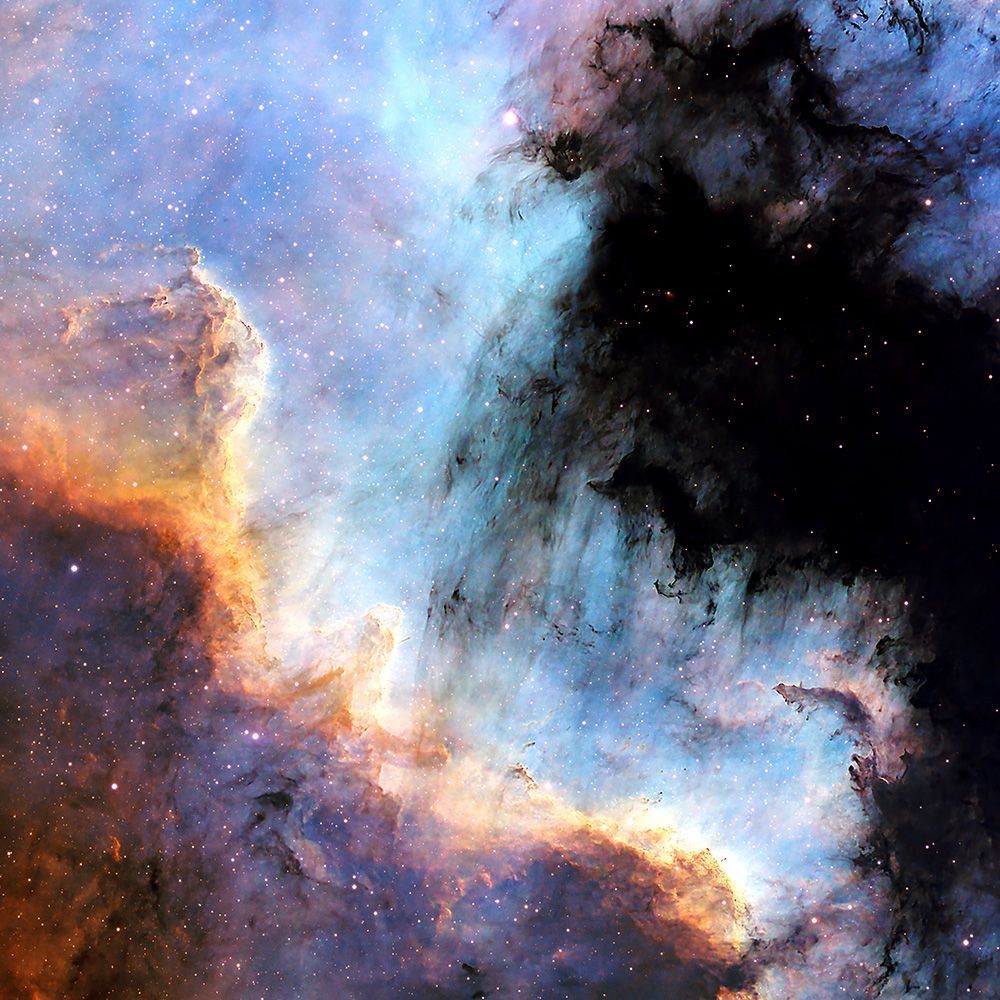
CYGNUS WALL
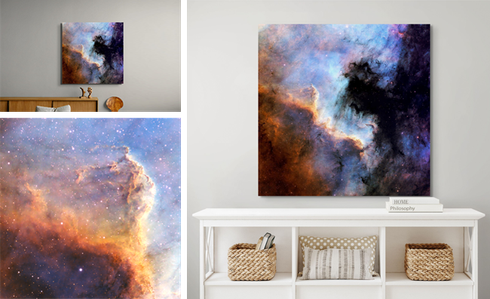
Part of the expansive North America Nebula, the Cygnus Wall is a towering region of active star formation.
Powerful stellar winds and radiation carve the surrounding gas into bright ridges and deep shadows, revealing the structures in the heart of the Milky Way.
ARTIST'S NOTES
The black structure, that dominates the right half of this image, is clouds of dark dust much closer to Earth than the glowing gases that make up the colored portion of this nebula.
This is a portion of a larger region named the North America Nebula. Blue is Oxygen. The warm colors are Hydrogen and Sulphur.
IMAGING EQUIPMENT
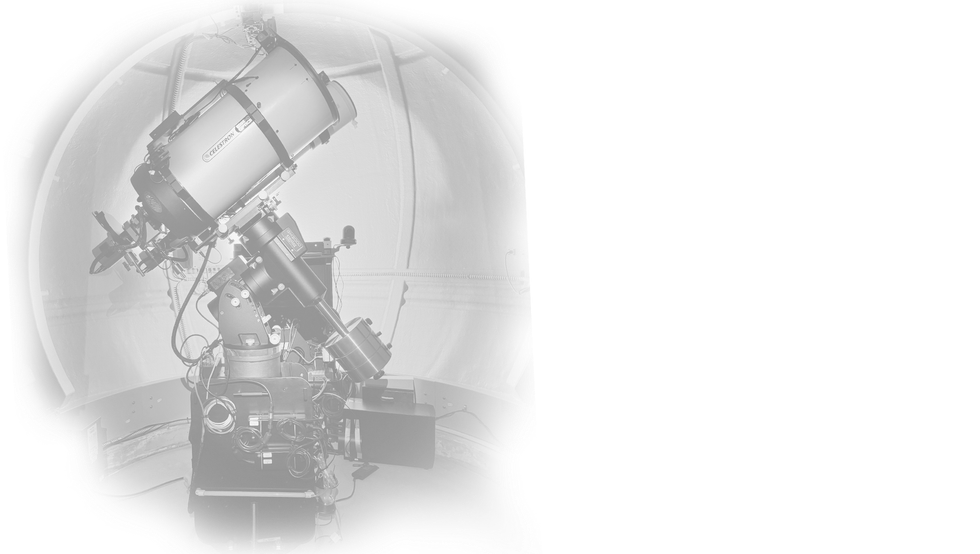
I use two telescopes in my observatory for most imaging. One is 11" diameter that has a field of view roughly the size of the Moon. The smaller telescope is 5.75" in dimeter and has a field of view of roughly 5 times the width of the Moon.
The two telescopes are mounted to a very high precision mount that tracks objects across the sky throughout the night. Controlling the equipment is done remotely from my home in Salt Lake City.
IMAGING PROCESS
On clear nights, and when the upper atmosphere is stable, I program the equipment to open the dome and sync it to the motion of the mount, open telescope covers, locate a pedicular object, align to the object, focus the camera, select correct filters, then image by taking 7-minute exposures. At astronomical dawn, just before the sky begins to lighten, then everything automatically shuts down and the dome closes.
I download the files the following morning then begin the image process work. I will typically spend 20 to 40 hours processing each image.
SOUL NEBULA
SERIES : 1 of 2
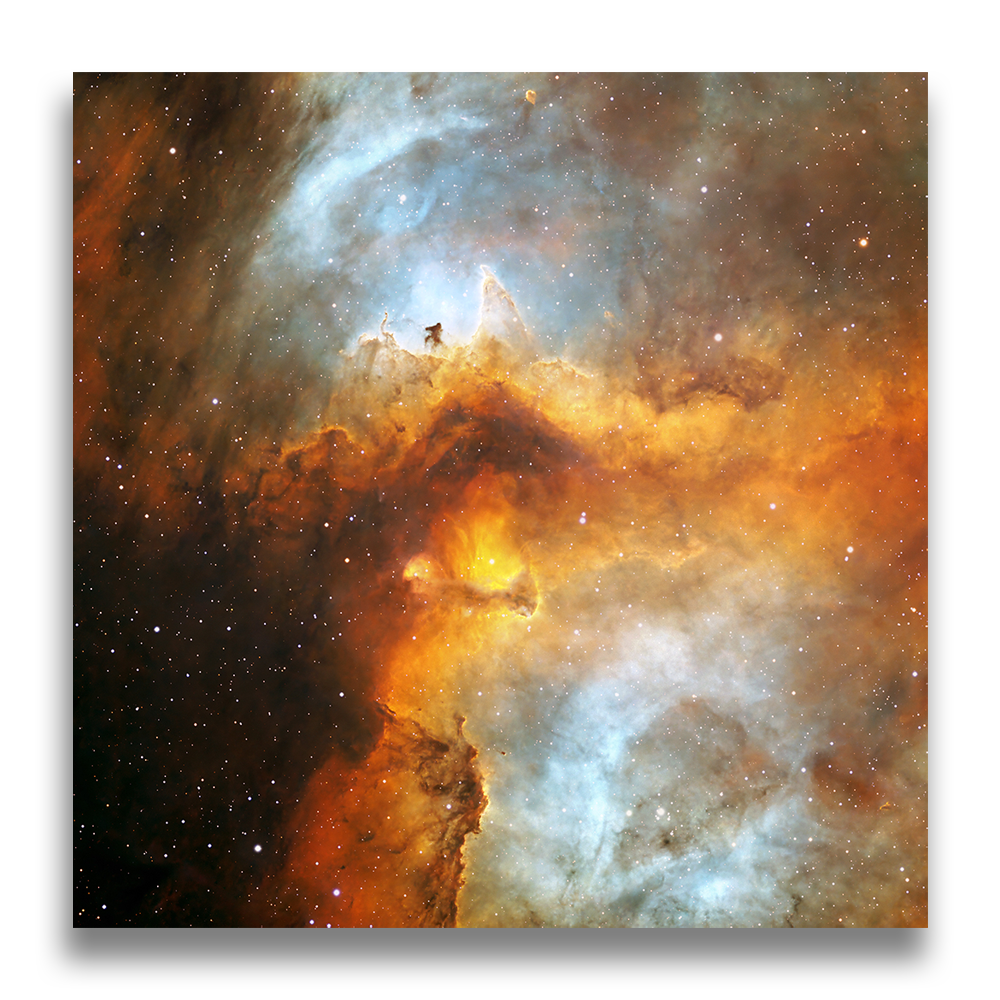
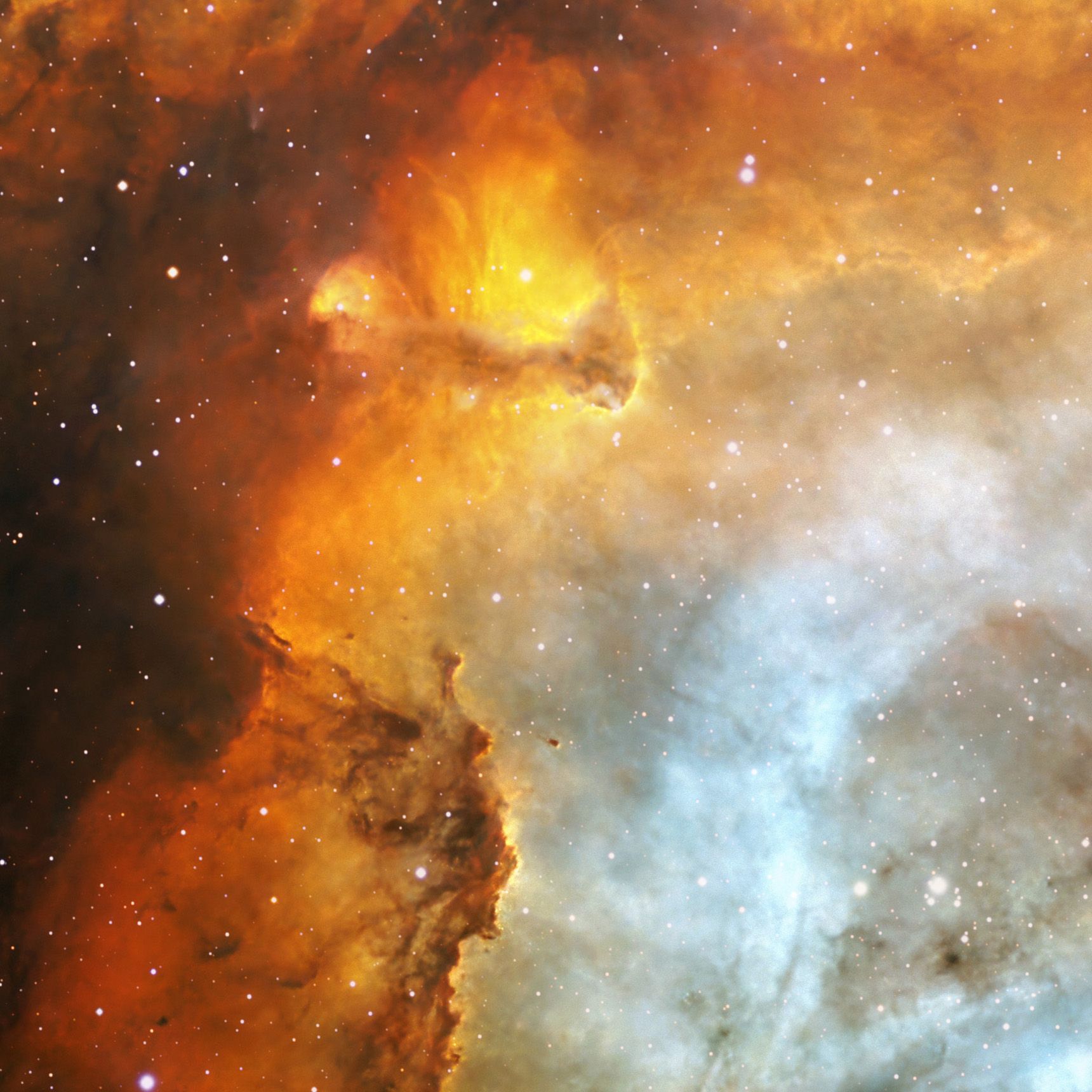
The Soul Nebula is a sprawling star-forming region where newborn stars illuminate vast clouds of gas and dust. Its sweeping curves and carved-out structures create a natural sense of depth that draws the eye inward.
Subtle color variations hint at the powerful forces shaping this region—radiation and gravity at work.
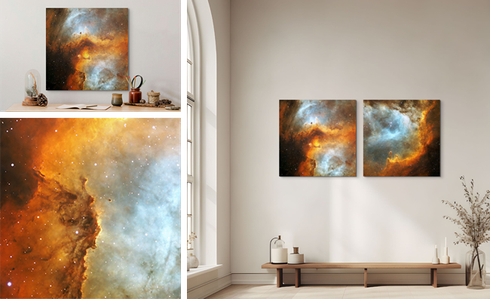
ARTIST'S NOTES
The larger stars, just above the bottom and to the right of center, are pushing the dust away causing the cave like structure and energizing the particles causing them to emit light of their own - hence the name Emission Nebula.
Imaged over multiple nights using Hydrogen Alpha, Sulphur II and Oxygen III filters. The warm colors consist of Hydrogen and Sulphur. The cool blue is Oxygen.
SOUL NEBULA
SERIES : 2 of 2
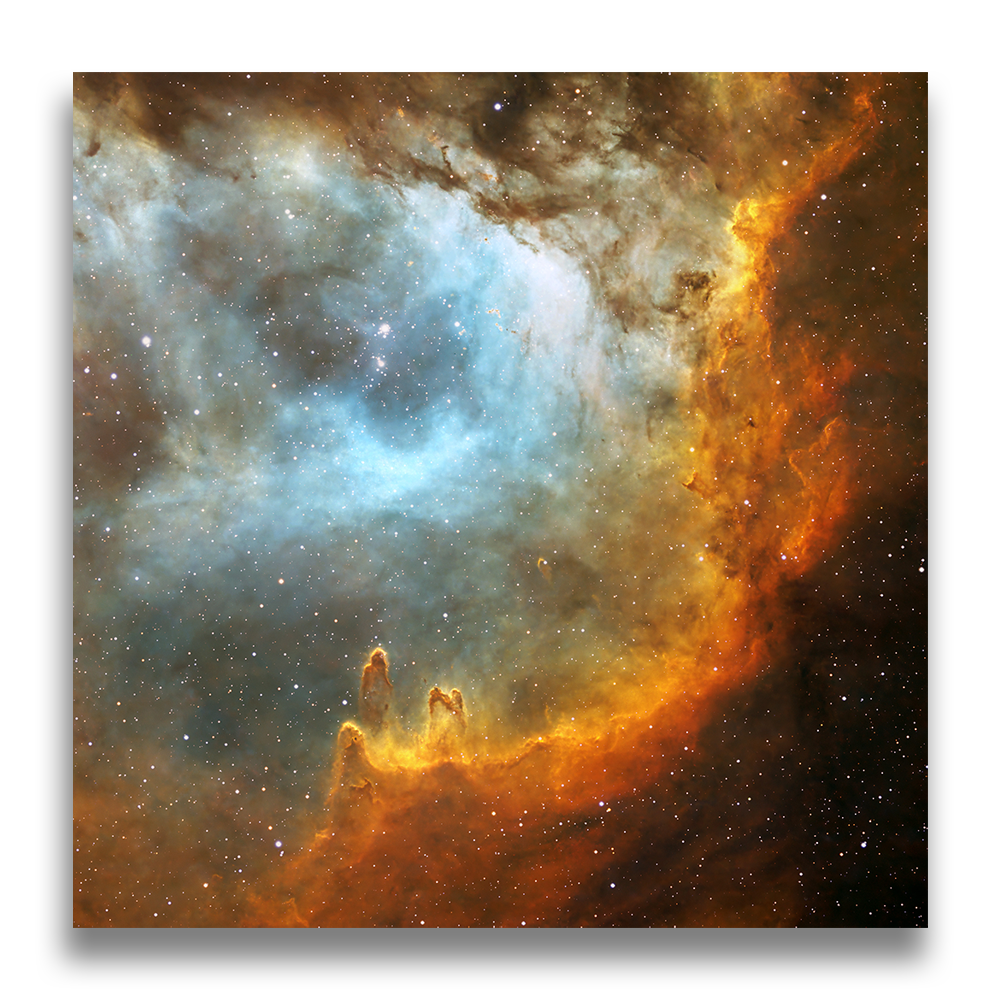
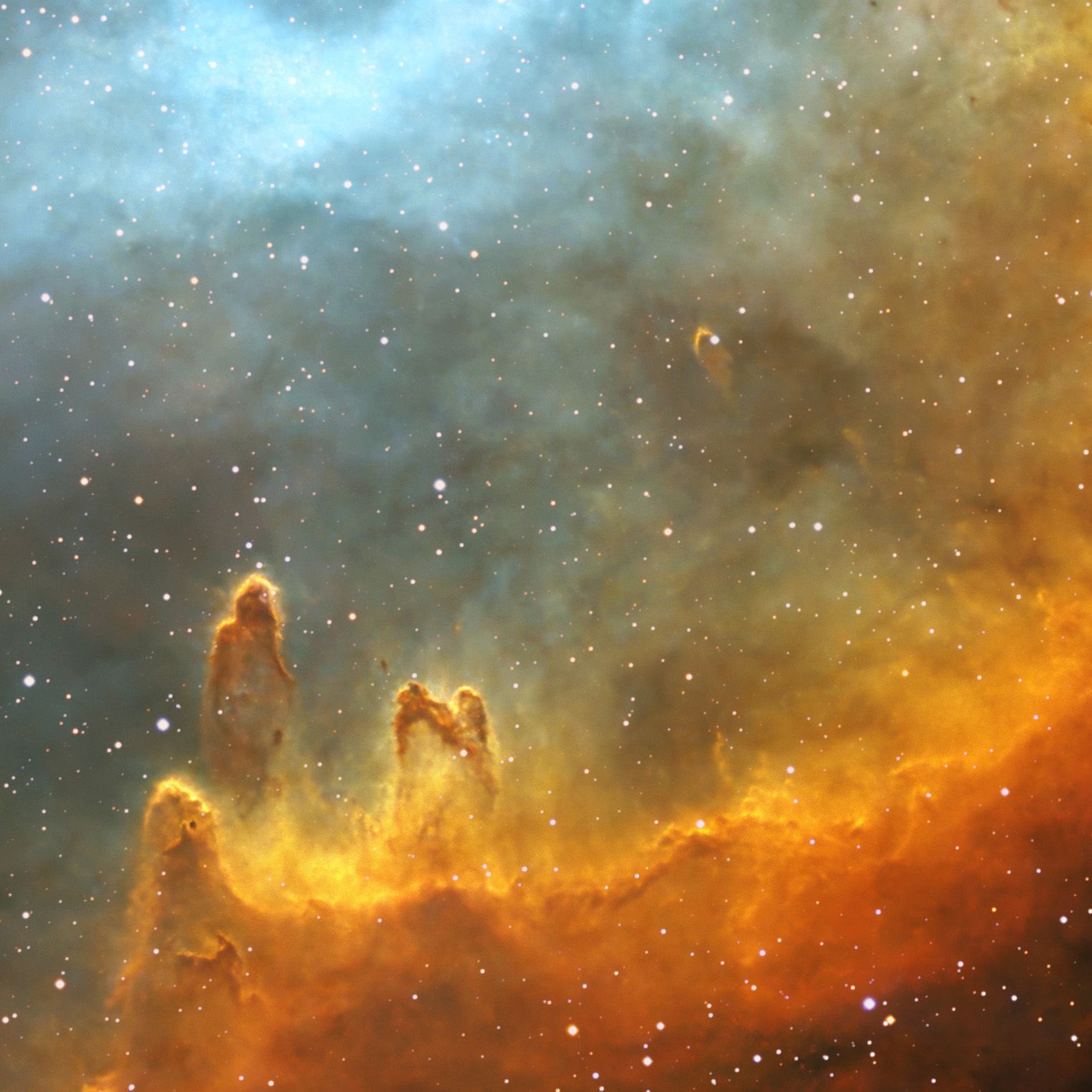
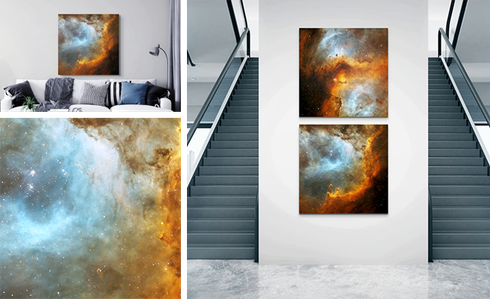
The nebula’s cool background gives the scene an almost serene underwater presence despite its energetic origins.
It’s a striking example of how dynamic and beautiful the universe becomes when captured in long exposures.
ARTIST'S NOTES
The larger stars, above and to the left of center, are pushing the dust away from the center causing the cave like structure and energizing the particles causing them to emit light of their own.
Imaged over multiple nights using Hydrogen Alpha, Sulphur II and Oxygen III filters. The warm colors consist of Hydrogen and Sulphur. The cool blue is Oxygen.

THE SUN
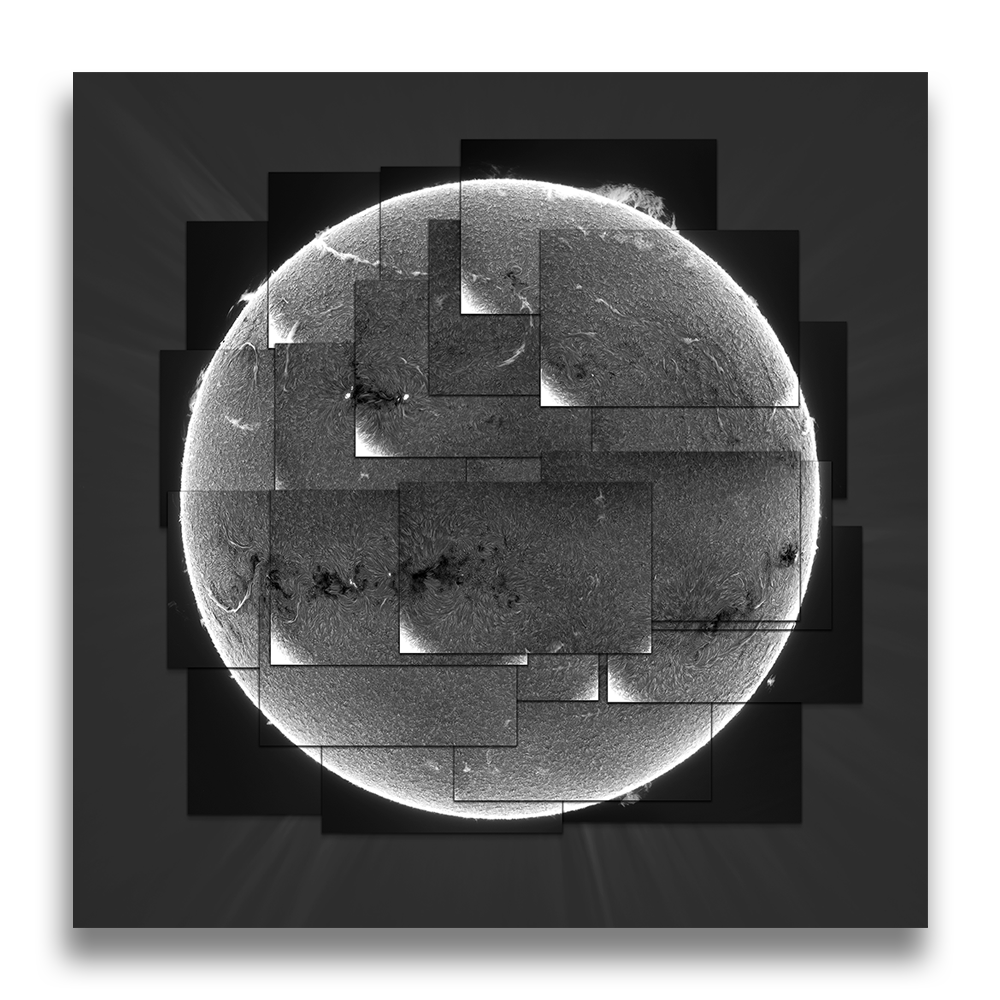
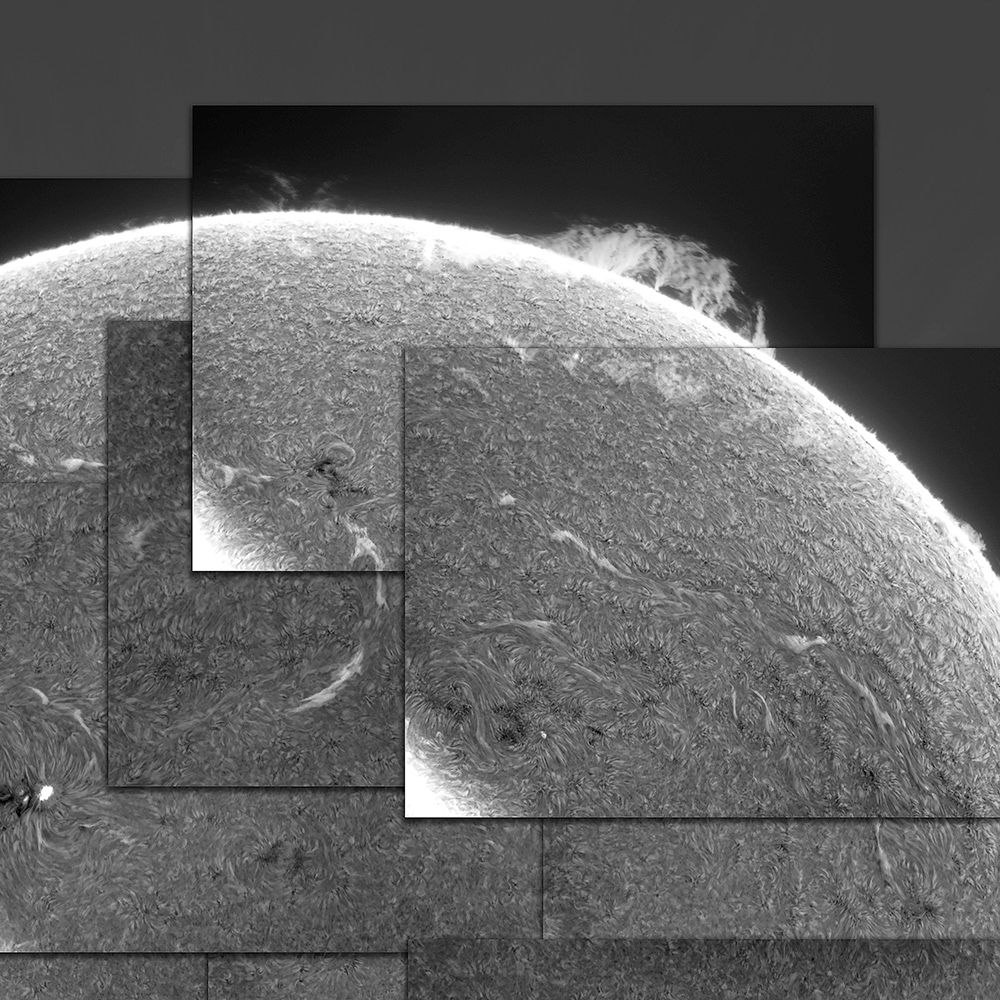
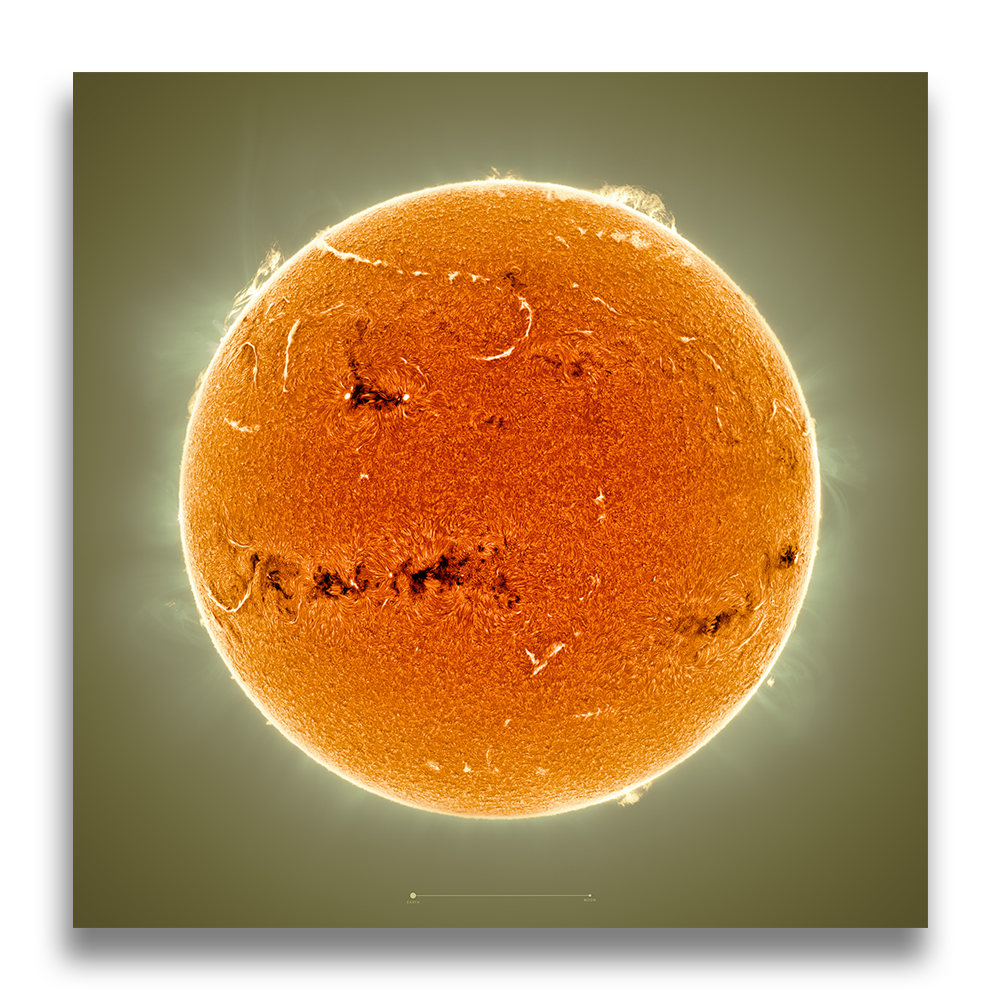
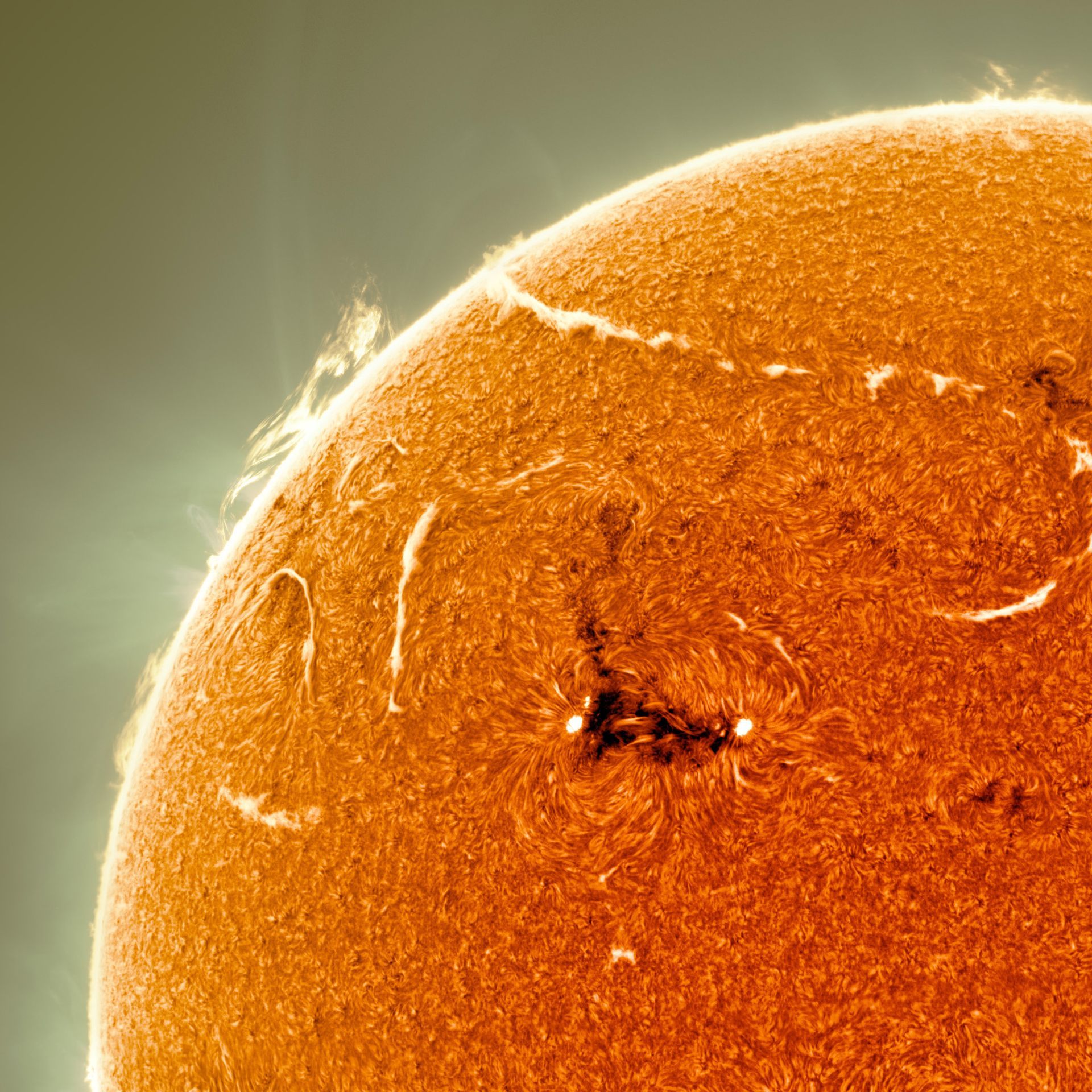
The Sun is a turbulent sphere of fusing hydrogen, always changing with shifting magnetic fields, rising arcs of plasma, and seething convection cells.
Its surface boils with granules the size of continents, while sunspots, flares, and filaments constantly reshape the star that powers every on Earth.
ARTIST'S NOTES
The image above is a composite of 31 separate images, each created from a series of 1000 photos taken with the use of a solar-dedicate Hydrogen Alpha telescope.
At the bottom of the image are two small dots with a line connecting them. This is a scaled representation of the Earth, Moon and the distance between them.
THE SUN : RAW IMAGES
These 31 raw solar frames represent separate high-resolution captures, each focused on a different section of the Sun’s surface.
Though the panels look coarse at this stage, they will be aligned, stacked, and blended into one crisp, unified color image.